


Blog
Strengthening Structures for High-Risk Zones
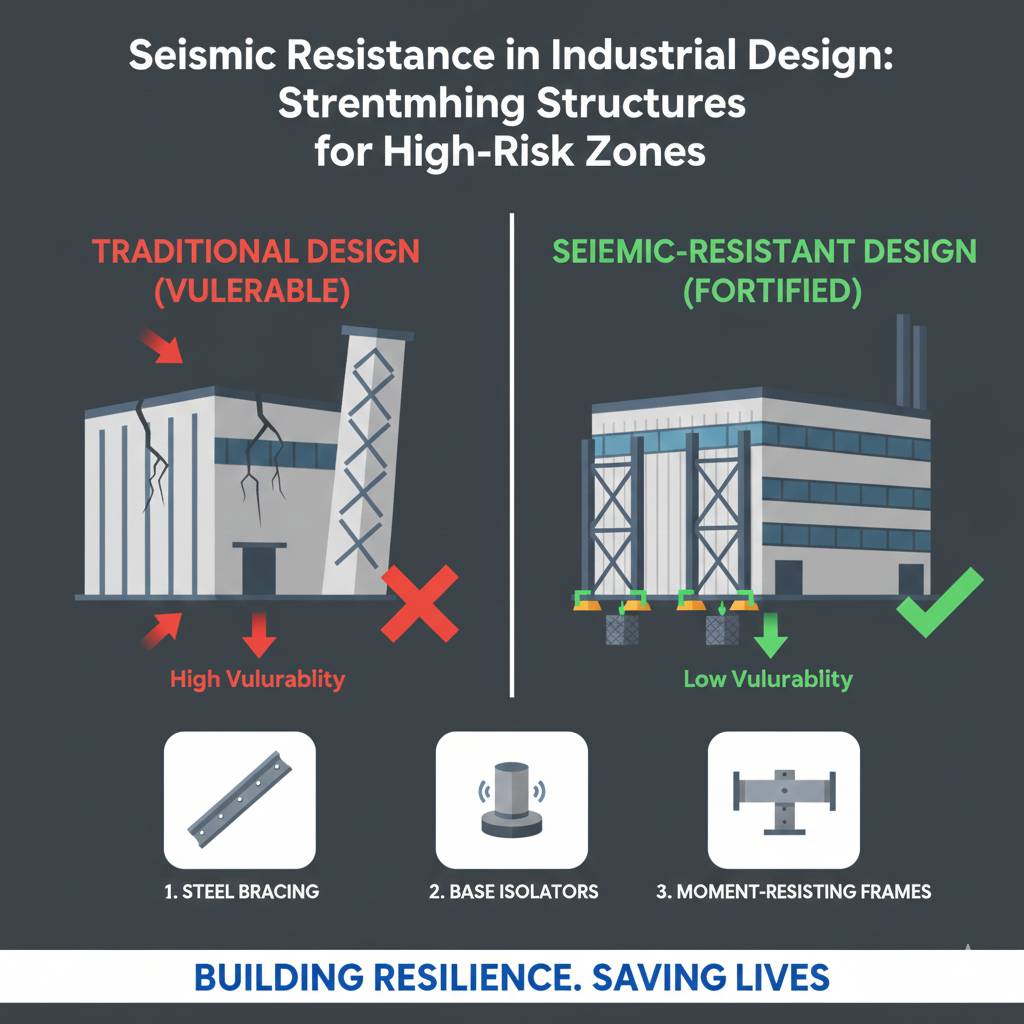
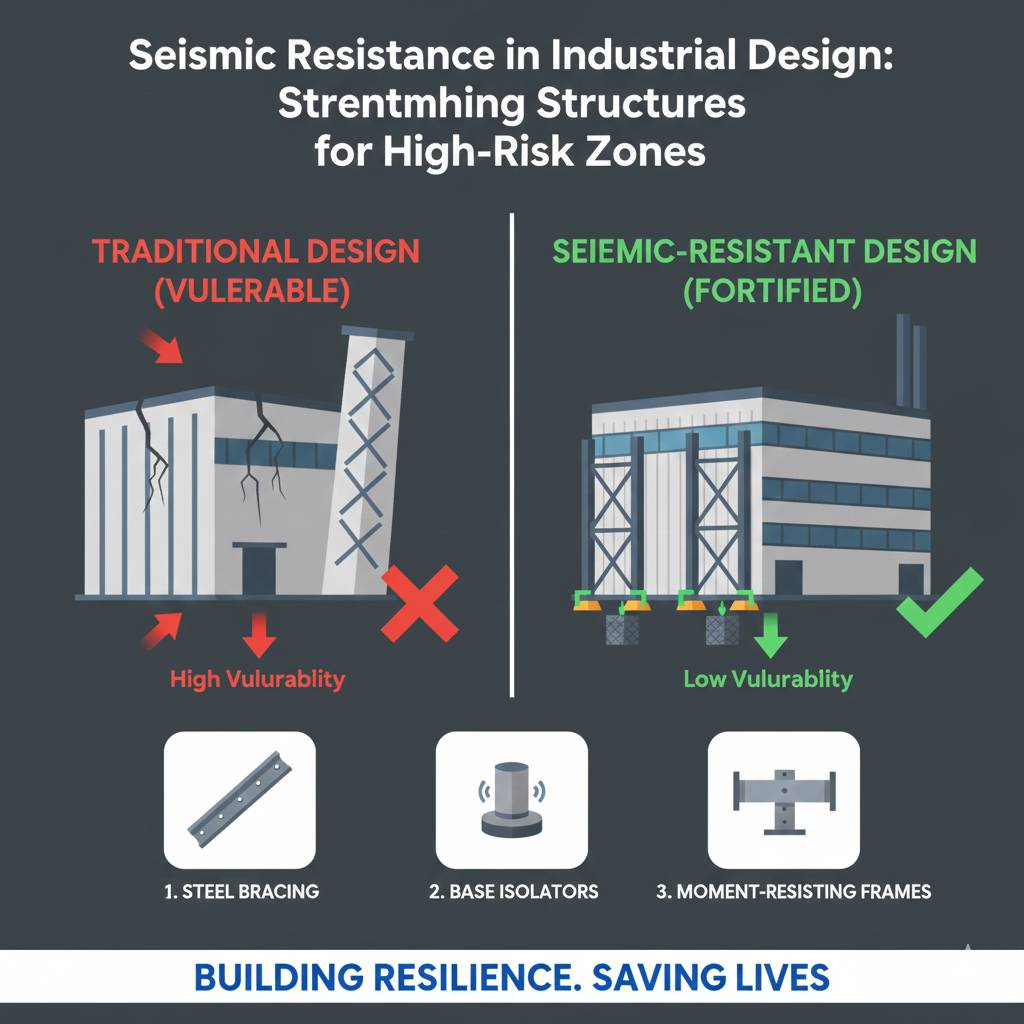
Industrial buildings located in seismic-prone regions face unique structural challenges. Unlike residential structures, industrial facilities carry heavy machinery, large spans, dynamic loads, and continuous operations, making seismic resistance a critical design and safety requirement rather than an optional upgrade.
Understanding Seismic Risk in Industrial Zones
Seismic risk depends on:
- Geographic location
- Soil conditions
- Structural configuration
- Operational loads
Industrial structures in Zones III, IV, and V require enhanced seismic considerations.
Why Industrial Buildings Are More Vulnerable During Earthquakes
Key vulnerability factors include:
- Heavy equipment mass
- Irregular layouts
- Large open spans
- Rigid structural systems
Without proper detailing, these features amplify seismic forces.
Seismic Forces and Structural Behavior
Earthquake forces generate:
- Lateral inertia loads
- Torsional effects
- Repeated cyclic stress
Structures must dissipate energy without brittle failure.
Importance of Ductility in Industrial Structures
Ductility allows structures to:
- Deform without collapse
- Absorb seismic energy
- Provide warning before failure
Brittle systems fail suddenly and catastrophically.
Role of Structural Configuration in Seismic Performance
Well-performing industrial buildings typically have:
- Symmetric layouts
- Regular load paths
- Balanced mass distribution
Irregular geometry increases seismic demand.
Load Path Continuity During Earthquakes
Clear load paths ensure:
- Seismic forces travel safely to foundations
- No stress concentration at joints
- Reduced risk of progressive collapse
Discontinuities are common failure points.
Foundation Design for Seismic Resistance
Foundations must address:
- Soil liquefaction
- Differential settlement
- Overturning forces
Soil-structure interaction plays a major role during earthquakes.
Importance of Connection Detailing
Failures often occur at:
- Beam-column joints
- Bracing connections
- Anchor bolts
Ductile detailing ensures controlled energy dissipation.
Steel vs RCC Performance Under Seismic Loads
Steel structures:
- Perform better in ductility
- Allow energy absorption
RCC structures:
- Require meticulous detailing
- Depend heavily on confinement reinforcement
Hybrid systems combine the strengths of both.
Use of Bracing Systems in Industrial Buildings
Bracing improves:
- Lateral stiffness
- Drift control
- Load redistribution
Common systems include X-bracing, V-bracing, and shear walls.
Base Isolation and Energy Dissipation Techniques
Advanced seismic systems include:
- Base isolators
- Dampers
- Shock absorbers
These reduce force transmission to the superstructure.
Machinery Anchorage and Non-Structural Safety
Seismic safety extends beyond frames:
- Equipment anchorage
- Piping flexibility
- Storage rack stability
Non-structural failures cause major industrial losses.
Retrofitting Existing Industrial Buildings
Older facilities often lack:
- Modern seismic detailing
- Updated code compliance
Retrofitting strengthens structural components without full demolition.
Common Retrofitting Techniques
Typical methods include:
- Steel jacketing
- Concrete encasement
- Addition of shear walls
- Bracing installation
Selection depends on structural assessment results.
Seismic Design Codes Applicable in India
Key standards include:
- IS 1893 (Seismic forces)
- IS 13920 (Ductile detailing)
- IS 456 and IS 800
Compliance ensures minimum safety thresholds.
Importance of Structural Audits in Seismic Zones
Audits help:
- Identify vulnerabilities
- Assess residual capacity
- Recommend strengthening priorities
They are critical for operational continuity.
Post-Earthquake Structural Assessment
After seismic events:
- Hidden damage may exist
- Microcracks weaken members
- Immediate evaluation prevents secondary failures
Visual inspection alone is insufficient.
Balancing Seismic Safety and Cost Efficiency
Effective seismic design:
- Focuses on life safety
- Allows controlled damage
- Prevents collapse
Strategic strengthening delivers maximum safety at optimal cost.
Future Trends in Seismic-Resistant Industrial Design
Emerging practices include:
- Performance-based seismic design
- Smart monitoring systems
- Modular energy-dissipating components
These improve resilience beyond code minimums.
Conclusion
Seismic resistance in industrial design is not limited to structural strength—it involves ductility, detailing, load path continuity, foundation behavior, and ongoing assessment. In high-risk zones, integrating seismic resilience at both design and retrofit stages is essential to protect lives, assets, and operational stability.