


Blog
Sustainable Structural Engineering
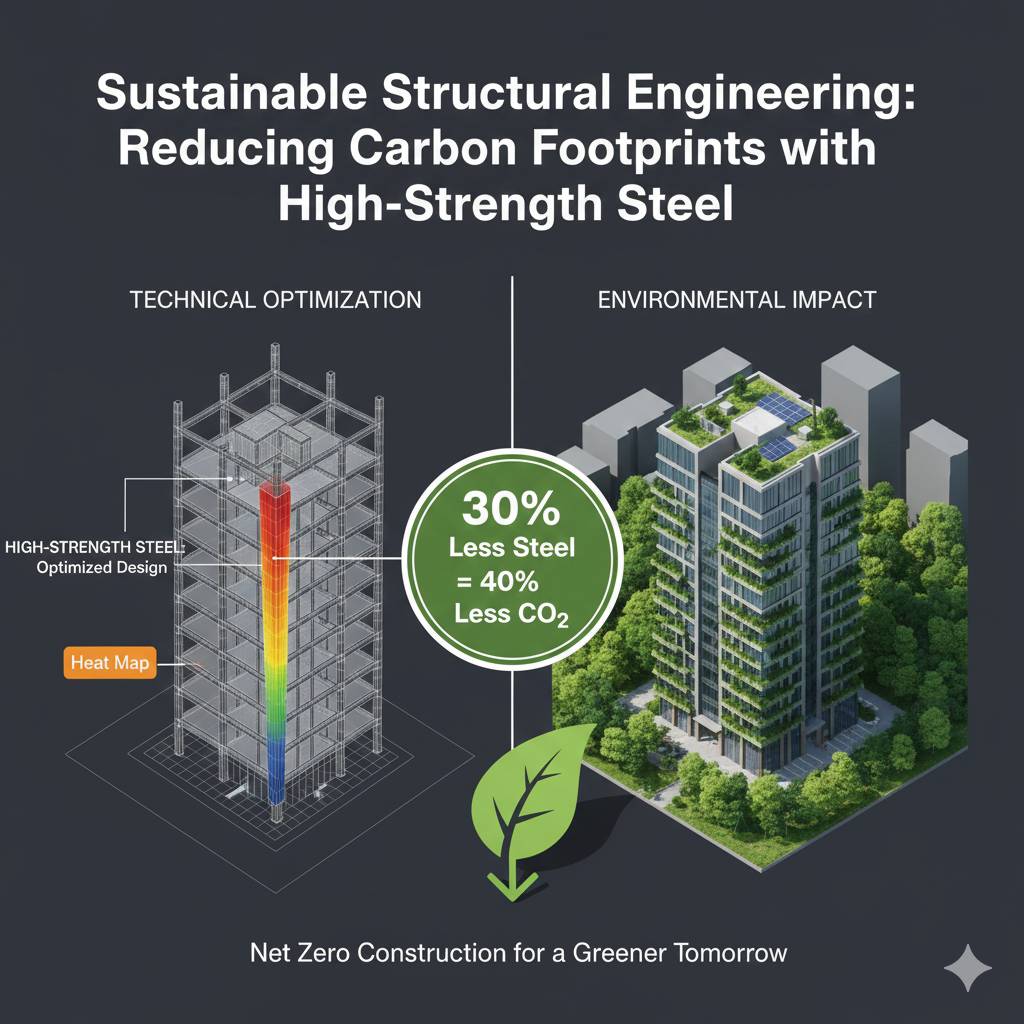
Sustainability is no longer limited to green finishes or energy-efficient equipment. In structural engineering, material selection and structural efficiency play a decisive role in reducing a building’s overall carbon footprint. Among all construction materials, steel—when used intelligently—has emerged as a powerful enabler of sustainable structural design.
High-strength steel allows engineers to achieve greater load-carrying capacity with less material, directly reducing embodied carbon while maintaining safety and durability.
Understanding Sustainability in Structural Engineering
Structural sustainability focuses on:
- Efficient material usage
- Longer service life
- Reduced environmental impact
- Lower maintenance and demolition waste
The goal is to achieve maximum structural performance with minimum resource consumption.
What Is High-Strength Steel?
High-strength steel refers to steel grades with:
- Higher yield strength
- Improved tensile capacity
- Enhanced fatigue resistance
These steels outperform conventional grades while requiring smaller cross-sections.
Carbon Footprint of Conventional Structural Steel
Traditional steel construction contributes to carbon emissions due to:
- High material volume
- Energy-intensive manufacturing
- Transportation weight
- Overdesign practices
Reducing steel quantity directly lowers embodied carbon.
How High-Strength Steel Reduces Carbon Emissions
High-strength steel enables:
- Thinner sections
- Reduced member sizes
- Fewer columns and beams
- Lower total tonnage
Less steel production means lower CO₂ emissions at the source.
Material Efficiency and Structural Optimization
Structural optimization using high-strength steel results in:
- Efficient load paths
- Reduced redundancy
- Leaner framing systems
Engineering precision replaces excessive material usage.
Impact on Foundation Design
Lighter superstructures lead to:
- Smaller foundations
- Reduced concrete volume
- Lower excavation requirements
This creates a compound sustainability benefit across the project.
Transportation and Logistics Benefits
High-strength steel reduces:
- Truckloads to site
- Fuel consumption
- Handling time
Logistics-related emissions are often overlooked but significant.
Construction Speed and Sustainability
Using fewer and lighter components:
- Speeds up erection
- Reduces on-site energy usage
- Minimizes equipment runtime
Faster construction equals lower environmental impact.
Lifecycle Carbon Reduction
High-strength steel offers:
- Longer service life
- Better fatigue resistance
- Lower maintenance frequency
Sustainability improves when structures last longer without intervention.
Recyclability of High-Strength Steel
Steel is:
- 100% recyclable
- Reusable without quality loss
- Part of a circular economy
High-strength grades retain full recyclability benefits.
Reduced Demolition Waste
Lean structural systems:
- Generate less demolition debris
- Lower landfill pressure
- Support sustainable urban redevelopment
End-of-life impact matters in sustainable engineering.
Performance in High-Rise and Industrial Structures
High-strength steel is especially effective for:
- Industrial sheds
- High-rise frames
- Long-span structures
These building types benefit most from material efficiency.
High-Strength Steel in Seismic Design
Sustainability also means resilience:
- Higher ductility
- Better energy dissipation
- Reduced repair after earthquakes
Resilient structures reduce post-disaster reconstruction emissions.
Compatibility with PEB and Hybrid Systems
High-strength steel integrates seamlessly with:
- Pre-Engineered Buildings
- Hybrid RCC–steel systems
- Modular construction
These systems maximize sustainability benefits.
Role of Structural Engineers in Sustainable Steel Usage
Engineers contribute by:
- Selecting appropriate grades
- Avoiding overdesign
- Optimizing member sizing
- Ensuring code compliance
Sustainability starts at the design desk.
Indian Standards Supporting High-Strength Steel
Relevant codes include:
- IS 800 (Steel design)
- IS 2062 (Steel grades)
- IS 875 (Loading)
Modern codes support efficient steel usage when applied correctly.
Cost vs Carbon: A Balanced Perspective
High-strength steel may cost more per ton, but:
- Requires fewer tons
- Reduces foundation costs
- Saves construction time
Sustainability and economy often align.
Digital Design Tools Enhancing Sustainable Outcomes
Advanced analysis tools allow:
- Accurate force modeling
- Section optimization
- Reduced material waste
Technology amplifies sustainable engineering decisions.
Challenges in Adopting High-Strength Steel
Common challenges include:
- Lack of awareness
- Improper fabrication practices
- Inadequate detailing
Education and expertise resolve most barriers.
Future of Sustainable Structural Engineering
Trends shaping the future:
- Performance-based design
- Low-carbon steel production
- AI-driven optimization
- Lifecycle-based structural decisions
Sustainability will become a baseline, not a feature.
Conclusion
High-strength steel plays a crucial role in reducing carbon footprints without compromising safety, durability, or performance. By enabling material efficiency, lighter structures, faster construction, and longer service life, it aligns perfectly with the goals of sustainable structural engineering. When applied thoughtfully, it transforms steel from a high-carbon material into a solution for responsible construction.