

Blog
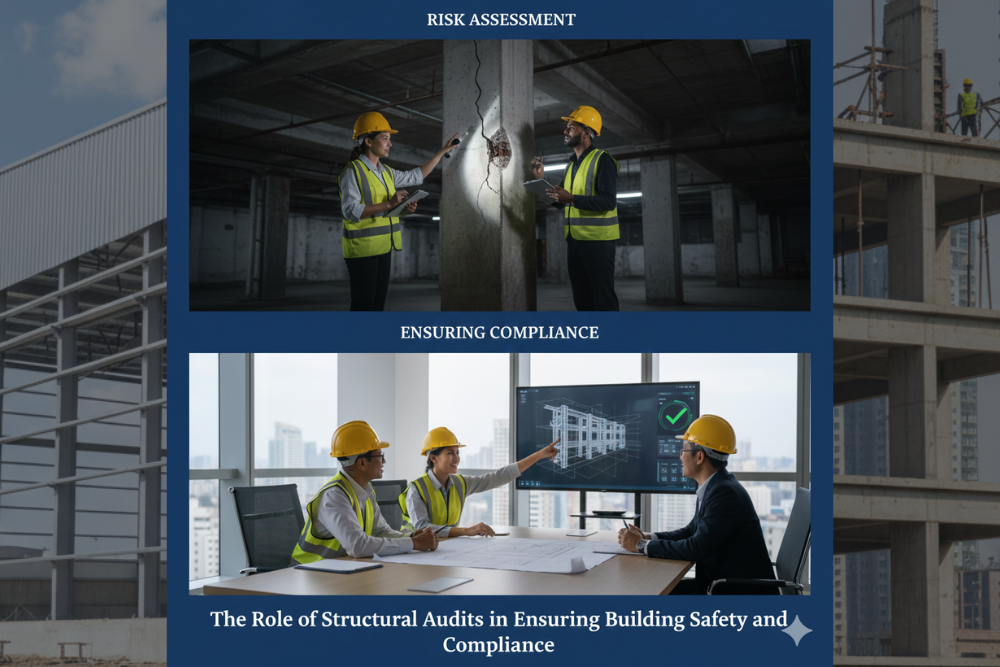
The Role of Structural Audits in Ensuring Building Safety and Compliance
Introduction
As cities expand and buildings age, the importance of structural safety has never been more critical. Every year, India witnesses dozens of tragic structural failures—many of which could have been prevented with timely intervention.
That’s where structural audits come in. They are not just a legal necessity in many cases, but also a responsible and proactive measure for the safety of occupants and the longevity of the structure.
At Rakhra Associates, a trusted name among structural engineers in Chandigarh, Mohali, and Punjab, we specialize in comprehensive structural audits for residential, commercial, industrial, and institutional buildings. In this blog, we break down what a structural audit is, why it matters, when it is required, and how it benefits all stakeholders.
What Is a Structural Audit?
A structural audit is a systematic inspection and evaluation of a building’s structural system—columns, beams, slabs, foundations, walls, and connections—to assess its safety, health, and stability.
It involves:
- Visual inspection
- Non-destructive testing (NDT)
- Load and stress analysis
- Structural drawings review
- Reporting with actionable recommendations
It is typically conducted by certified structural engineers or consultants who are registered with professional bodies like COA or IEI.
Why Are Structural Audits Important?
✅ 1. Ensures Safety of Occupants
The primary goal is to ensure that the building is structurally sound and safe for living, working, or industrial activities. This is especially important for old buildings (15+ years), structures near construction zones, and those showing signs of distress.
✅ 2. Prevents Unexpected Collapses
Many buildings that collapse show warning signs—cracks, rusted reinforcements, water seepage, sagging slabs—that go unnoticed until it’s too late. A structural audit helps identify and fix these before disaster strikes.
✅ 3. Complies with Local Government Laws
In many Indian states including Maharashtra and Delhi, structural audits are mandatory for buildings over 30 years old. Municipal bodies like MC Chandigarh, GMADA, and others are increasingly moving towards similar regulations.
✅ 4. Saves Cost in the Long Run
Timely identification of structural weaknesses allows for early repairs, preventing expensive reconstruction or litigation due to accidents.
✅ 5. Essential for Building Renovation, Sale, or Insurance
Structural audit reports are often required when:
- Renovating or modifying a building
- Selling older properties
- Applying for building insurance or claiming damage
When Should a Structural Audit Be Conducted?
- Building is 15–30 years or older
- Visible cracks, seepage, corrosion, or deformations
- After natural disasters like earthquakes or floods
- Nearby heavy construction or excavation activities
- Before major retrofits or change in usage
- For compliance with municipal bylaws
At Rakhra Associates, we recommend audits every 5–10 years depending on the building type and condition.
What Does a Structural Audit Cover?
A structural audit includes the following:
🔍 1. Visual Inspection
- Wall cracks (horizontal/vertical/diagonal)
- Water seepage or dampness
- Corroded steel bars
- Deflected beams or sagging slabs
- Plaster peeling or disintegration
🧪 2. Non-Destructive Testing (NDT)
- Rebound Hammer Test: Assesses surface strength of concrete
- Ultrasonic Pulse Velocity Test (UPV): Checks internal flaws
- Cover Meter Test: Measures concrete cover over steel
- Half Cell Potential Test: Detects corrosion potential in rebars
- Core Cutting Test: For compressive strength testing (partially destructive)
📐 3. Structural Design Review
- Cross-checking original architectural and structural drawings
- Verifying if construction followed approved designs
- Analyzing if current loads/stresses exceed design capacity
📄 4. Final Report and Recommendations
- Grading of structural health (Safe / Requires Repair / Unsafe)
- Suggested actions: minor repairs, retrofitting, or demolition
- Estimated repair costs and timelines
- Safety certification (if applicable)
Structural Audits in Chandigarh, Mohali & Punjab – Local Guidelines
While Chandigarh MC and Punjab Mandi Board do not yet have mandatory structural audit rules for all buildings, they do require stability certificates from structural engineers for:
- Building Plan Approvals
- Completion Certificates
- Occupancy Certificates (OC)
- Redevelopment Projects
Hence, a detailed structural audit can help owners obtain these certificates smoothly.
Who Should Conduct Structural Audits?
Only qualified structural engineers, preferably with experience in similar types of buildings, should be hired.
Look for:
- Degree in Civil/Structural Engineering
- Membership with IEI/COA or equivalent
- Proven portfolio of past audits
- Experience with IS codes (IS 456, IS 1893, IS 875, etc.)
Rakhra Associates, based in Chandigarh, is registered and experienced in handling audits for:
- Commercial complexes
- Housing societies
- Industrial sheds
- Hospitals and educational buildings
- Government infrastructure projects
Benefits to Different Stakeholders
| Stakeholder | Benefit from Structural Audit |
| Building Owner | Prevent costly damages and ensure safety |
| Residents | Feel secure and protected |
| Architects | Get reliable data for retrofits |
| Builders | Avoid liability and construction delays |
| Municipal Bodies | Enforce safety without legal gaps |
| Insurance Firms | Assess risk accurately |
Structural Audit vs Stability Certificate: What’s the Difference?
| Structural Audit | Stability Certificate |
| Detailed inspection, testing, analysis | Declaration by engineer on safety of structure |
| In-depth report (20–50+ pages) | 1–2 page formal certificate |
| Helps identify issues | Used for compliance or building permissions |
| Usually precedes or accompanies the certificate | Issued based on audit findings |
How Rakhra Associates Conducts Structural Audits
Our proven 6-step audit process ensures accuracy and transparency:
- Initial site visit and client briefing
- Visual inspection and data collection
- Non-destructive tests by certified technicians
- Review of drawings and load analysis
- Detailed report generation with photographic evidence
- Optional: Supervision of repairs/retrofitting
Case Study: Structural Audit of a 25-Year-Old Commercial Building in Mohali
Problem: Cracks in beams and water seepage in basement
Findings:
- Corroded rebars and honeycombing in several columns
- Inadequate concrete cover
- Structural weakening due to added load on rooftop without approval
Solution:
- Partial retrofitting with carbon fiber wrap
- Epoxy injection grouting
- Drainage correction to eliminate seepage
- Structural stability certificate issued post-repair
Outcome: Building declared safe; insurance approved.
Final Thoughts
Structural audits are no longer a “nice to have”—they are a must-have in today’s construction and maintenance ecosystem. Whether it’s to ensure compliance, protect lives, or plan future renovations, audits deliver peace of mind and real-world savings.