



Blog
Structural Designing for Himachal's Climate: Snow Load, Rainfall, and Roof Design Considerations
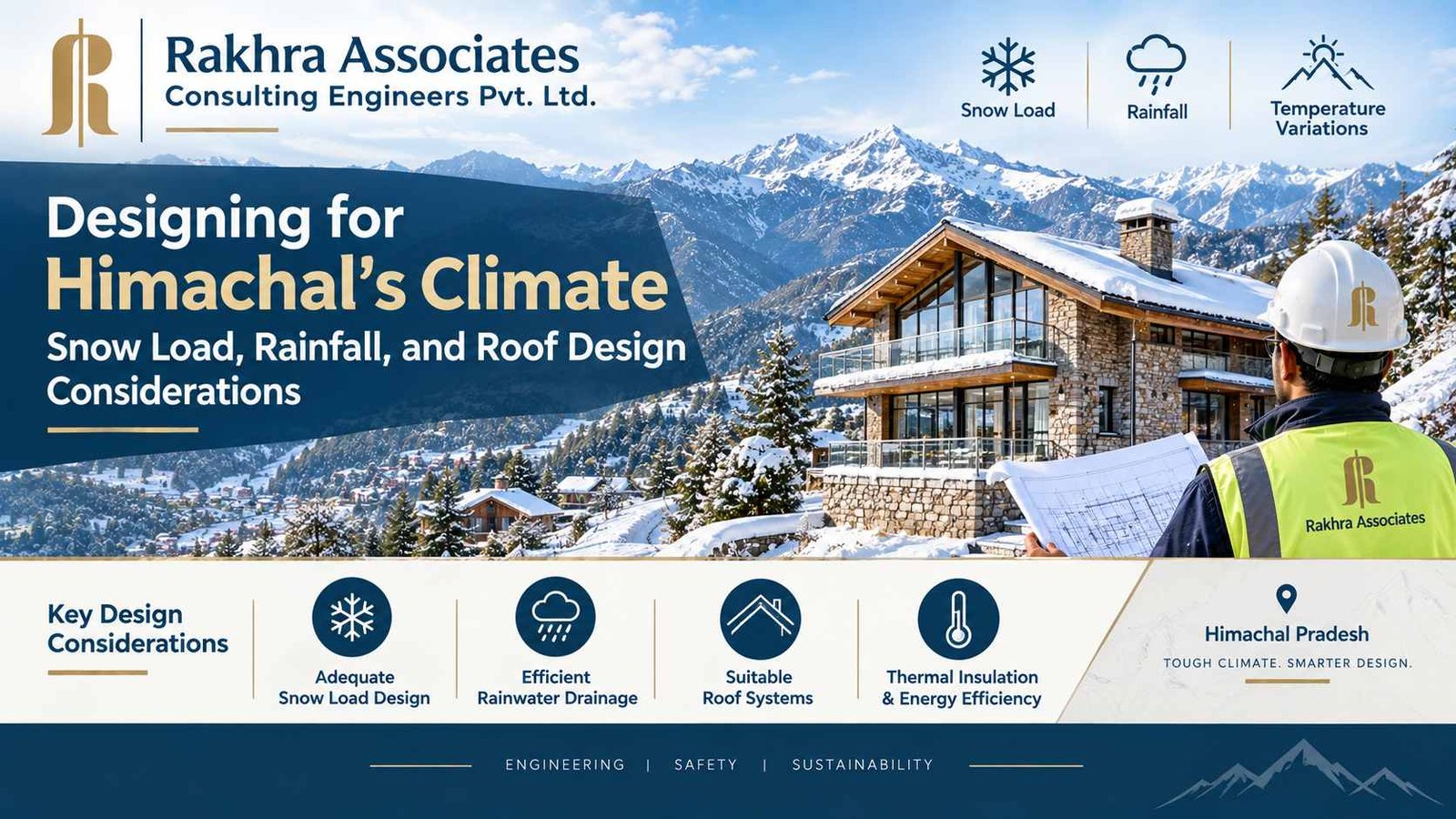
A building designed for Chandigarh or Ludhiana will not perform well in Manali or Shimla — not because the construction quality is different, but because the climate loads are entirely different. Structural design for Himachal Pradesh has to account for heavy winter snowfall, intense monsoon rainfall, and rapid temperature swings, all of which directly affect roof design, drainage planning, and structural load calculations.
This is one of the most overlooked aspects of hill construction, especially for clients building homestays, resorts, or homes based on plans originally drawn up for plains construction.
Snow Load: An Extra Force Most Plains-Based Designs Ignore
In much of Himachal — particularly higher-altitude areas like Manali, Kufri, Narkanda, and parts of Kinnaur and Lahaul-Spiti — roofs must be designed to carry significant accumulated snow weight, in addition to their own structural weight and any live loads.
Key snow load considerations in structural design include:
- Ground snow load data specific to the site's altitude and location, since snow accumulation varies significantly across even short distances in mountainous terrain
- Roof slope, since steeper roofs shed snow faster and reduce accumulated load, while flatter roofs must be designed to carry higher sustained loads
- Snow drifting, where wind can pile snow unevenly against parapets, dormers, or adjoining roof sections, creating concentrated loads far higher than the average across the roof
- Roof material and surface, since smoother materials (like metal sheeting) shed snow more readily than rough surfaces
Ignoring snow load — a common shortcut when plains-style flat RCC roofs are used in high-altitude construction — is a major cause of roof cracking and, in severe cases, structural distress.
Roof Pitch and Form: Function Before Aesthetics
Traditional Himachali architecture — steep pitched roofs, often in slate or GI sheeting — evolved specifically to shed snow and heavy rain quickly. When modern flat-roof designs are used purely for aesthetic reasons at higher altitudes, they take on structural risk that needs to be carefully calculated and compensated for, usually at added cost.
For most hill-station construction, we recommend:
- Pitched roofs (typically 30–45 degrees or steeper in heavy snow zones) for efficient snow shedding
- Adequate roof overhangs to protect walls and foundations from rain and snowmelt runoff
- Careful detailing at valleys and junctions, which are the most common points of leakage and localized load concentration
Monsoon Rainfall: Designing for Drainage, Not Just Strength
Himachal receives intense, concentrated monsoon rainfall, and structural design has to plan for water movement as carefully as it plans for load-bearing capacity. Poor drainage design is one of the leading causes of long-term structural damage in the region — including foundation erosion, retaining wall failure, and dampness-related deterioration of RCC and masonry.
A climate-appropriate design addresses:
- Roof drainage capacity — gutter and downpipe sizing based on actual regional rainfall intensity data, not generic assumptions
- Site grading that channels rainwater away from foundations and retaining structures
- Waterproofing detailing at roof-wall junctions, parapets, and terraces, where water ingress most commonly begins
- Sub-soil drainage around foundations in areas with poor natural percolation
Material and Durability Considerations
Himachal's climate — freeze-thaw cycles in winter, high humidity in monsoon, and UV exposure in summer — accelerates wear on certain materials faster than in plains conditions. Structural specifications for hill projects should account for:
- Concrete cover and mix design suited to freeze-thaw exposure
- Corrosion protection for exposed steel elements
- Material choices for roofing and cladding that perform well across a wide temperature range
Frequently Asked Questions
A: Ground snow load is typically derived from regional meteorological data and adjusted for the site's specific altitude, since snow accumulation can vary substantially even between locations a short distance apart at different elevations. Where site-specific data isn't readily available, engineers often apply conservative estimates based on the closest comparable altitude zone with documented snowfall records. This value then feeds directly into roof structural calculations, determining beam sizes, spacing, and the overall load-bearing capacity the roof must provide.
A: Snow drift load occurs when wind redistributes snow unevenly across a roof, piling it against parapets, adjoining higher roof sections, or other obstructions rather than leaving it evenly spread. This localized accumulation can create loads several times higher than the average uniform snow load calculated for the rest of the roof. Structural design must specifically check these drift-prone zones, since a roof designed only for average snow load can fail locally at these concentration points even while performing fine elsewhere.
A: Steeper roof pitches allow snow to slide off more readily under its own weight, particularly once a smooth or slippery roofing material is used, which reduces the sustained load the structure needs to carry. Structural codes typically allow a reduction in design snow load as roof slope increases beyond a certain angle, reflecting this natural shedding behavior. However, very steep roofs introduce their own considerations, such as increased wind uplift force and the need for secure snow-guard systems to prevent sudden, dangerous snow-slide events onto walkways below.
A: The most vulnerable points for water ingress are typically roof-to-wall junctions, parapet copings, and terrace-to-wall interfaces, where two different building elements meet and material movement can create small gaps over time. Proper detailing includes appropriately overlapped waterproofing membranes, adequately sloped surfaces to direct water away rather than allowing pooling, and durable flashing at all junctions. Because Himachal's rainfall is often intense and sustained rather than brief, waterproofing systems here need greater redundancy than would typically be specified for plains construction.
A: Standard plains-based rainwater goods sizing is usually based on average regional rainfall intensity assumptions that significantly understate the peak intensity common during Himachal's monsoon season. Gutters and downpipes sized using generic assumptions frequently overflow during intense rainfall events, leading to water infiltration at roof edges and increased load on parapet walls. Proper design uses local rainfall intensity data specific to the project's district to size drainage capacity with an appropriate safety margin.
A: Yes — in higher-altitude areas where temperatures fluctuate above and below freezing repeatedly through winter, water that has penetrated small cracks or pores in concrete and masonry expands as it freezes, gradually widening these openings over repeated cycles. This process, known as freeze-thaw deterioration, accelerates surface spalling and long-term material degradation if concrete mix design and cover thickness aren't specifically suited to the exposure condition. Specifying appropriate concrete mix design and protective surface treatments at the outset significantly reduces this long-term maintenance burden.
A: Large glazed areas are achievable in high-altitude hill construction, but they require careful structural and thermal detailing, including adequate structural framing to handle wind and snow loads around openings, and proper thermal breaks to prevent condensation issues in cold conditions. Glazing systems also need to account for potential snow accumulation on adjacent surfaces and appropriate drainage detailing at sills. With proper engineering input at the design stage, architectural ambitions like large view-oriented glazing can be achieved without compromising structural or climate performance.
A: Metal roofing sheets with appropriate coatings are widely favored in hill construction for their ability to shed snow efficiently and resist prolonged moisture exposure, provided fastening and lapping details are executed correctly. Traditional slate roofing, still visible across much of Himachal, offers excellent durability and natural snow-shedding characteristics but comes with higher installation cost and skilled-labor requirements. The right choice ultimately depends on the project's altitude, budget, and aesthetic goals, balanced against each material's specific maintenance needs over time.
A: Himachal's hill regions can experience significant daily and seasonal temperature swings, causing structural materials to expand and contract more than in more climatically stable plains locations. Without properly designed expansion joints at appropriate intervals, this movement can induce unwanted cracking in longer structures or those with significant temperature exposure, such as exposed terraces and parapets. Structural engineers typically specify joint spacing and detailing based on the specific building length, material, and exposure conditions at the site.
A: Yes — climate-appropriate design for snow load, drainage, and material durability typically adds a modest amount to initial design and construction cost compared to a generic design, but it substantially reduces long-term maintenance and repair expenses. Buildings designed without proper climate consideration frequently experience roof leaks, cracking, and material deterioration within just a few years of operation in Himachal's demanding conditions. For hospitality projects especially, this upfront investment directly protects both guest safety and the long-term value of the property.
A: Buildings at higher altitudes need specific snow load calculations; even mid-altitude towns with occasional heavy snowfall benefit from a conservative approach.
A: It also affects site grading, retaining wall drainage, foundation waterproofing, and long-term durability of exposed elements.
A: Yes, through structural reinforcement, an added secondary pitched roof, or improved drainage and waterproofing.
A: Generally yes for snow shedding, though very steep roofs need secure snow-guard systems to prevent sudden snow slides.
A: Yes, smoother materials like metal sheeting shed snow more readily than rough or textured roofing surfaces.
A: Yes, due to more intense and sustained monsoon rainfall requiring greater redundancy in waterproofing detailing.
A: No, they should be adapted for site-specific snow load, rainfall intensity, and temperature exposure conditions.
A: Yes, orientation affects sun exposure for snow melting and which building faces bear the brunt of prevailing wind-driven rain.
A: Yes, adequate overhangs protect walls and foundations from rain and snowmelt runoff, reducing long-term dampness issues.
Design for the Climate You're Actually Building In
Structural safety in Himachal Pradesh isn't just about seismic and slope considerations — it's equally about designing for the specific climate loads the region experiences every year. A structure that correctly accounts for snow, rain, and temperature cycles will need far less maintenance and last significantly longer than one designed with plains-based assumptions.
Rakhra Associates Consulting Engineers Pvt. Ltd. designs climate-appropriate structures for homes, hotels, and commercial buildings across Himachal Pradesh's hill stations. Contact our team to ensure your project is engineered for the conditions it will actually face.