
Categories
Structural Engineering

Role of Structural Engineers in Smart Cities Development in India

Blog

Role of Structural Engineers in Smart Cities Development in India


Introduction: Building the Framework of Tomorrow

India’s vision for Smart Cities represents one of the most ambitious urban transformation initiatives of the 21st century. With over 100 cities selected under the Smart Cities Mission, the goal is clear — to create urban spaces that are technologically advanced, sustainable, and resilient.

But behind every smart building, bridge, and transport corridor lies the genius of structural engineers — the silent force ensuring that innovation stands on a foundation of safety and strength.

Rakhra Associates, a leading name in structural engineering in Chandigarh, plays a pivotal role in shaping this new urban India through cutting-edge design, technology, and sustainable engineering practices.

What Are Smart Cities?

Smart cities leverage digital technology, data analytics, and sustainable materials to enhance urban living. They focus on efficient resource use, real-time data monitoring, and long-term environmental health.

Core features of Smart Cities include:

  • Smart infrastructure and buildings
  • Efficient energy and water management
  • Resilient transportation systems
  • Disaster-ready urban design
  • Eco-friendly construction materials

However, all of these depend heavily on structural engineers who ensure that smart systems have reliable and resilient physical foundations.

The Structural Engineer’s Role in Smart City Development

Structural engineers bridge the gap between urban planning and structural performance. Their job extends beyond design — it’s about innovation, sustainability, and safety in every beam, column, and foundation.

1. Designing Resilient Infrastructure

Smart cities demand infrastructure that can withstand seismic activity, climate impacts, and rapid urbanization.
Structural engineers use advanced modeling tools to ensure bridges, towers, and public buildings are both durable and adaptable to future demands.

2. Integrating Smart Materials and Technology

Modern engineering blends technology with material science.
Smart materials — such as self-healing concrete, fiber-reinforced polymers, and shape-memory alloys — allow structures to adapt and heal over time.
Rakhra Associates actively integrates such innovations into their RCC and steel projects in Chandigarh and nearby smart city developments.

3. Seismic and Disaster-Resistant Design

Many Indian smart cities, including Chandigarh, Dehradun, and Guwahati, fall within seismic zones.
Structural engineers employ techniques like:

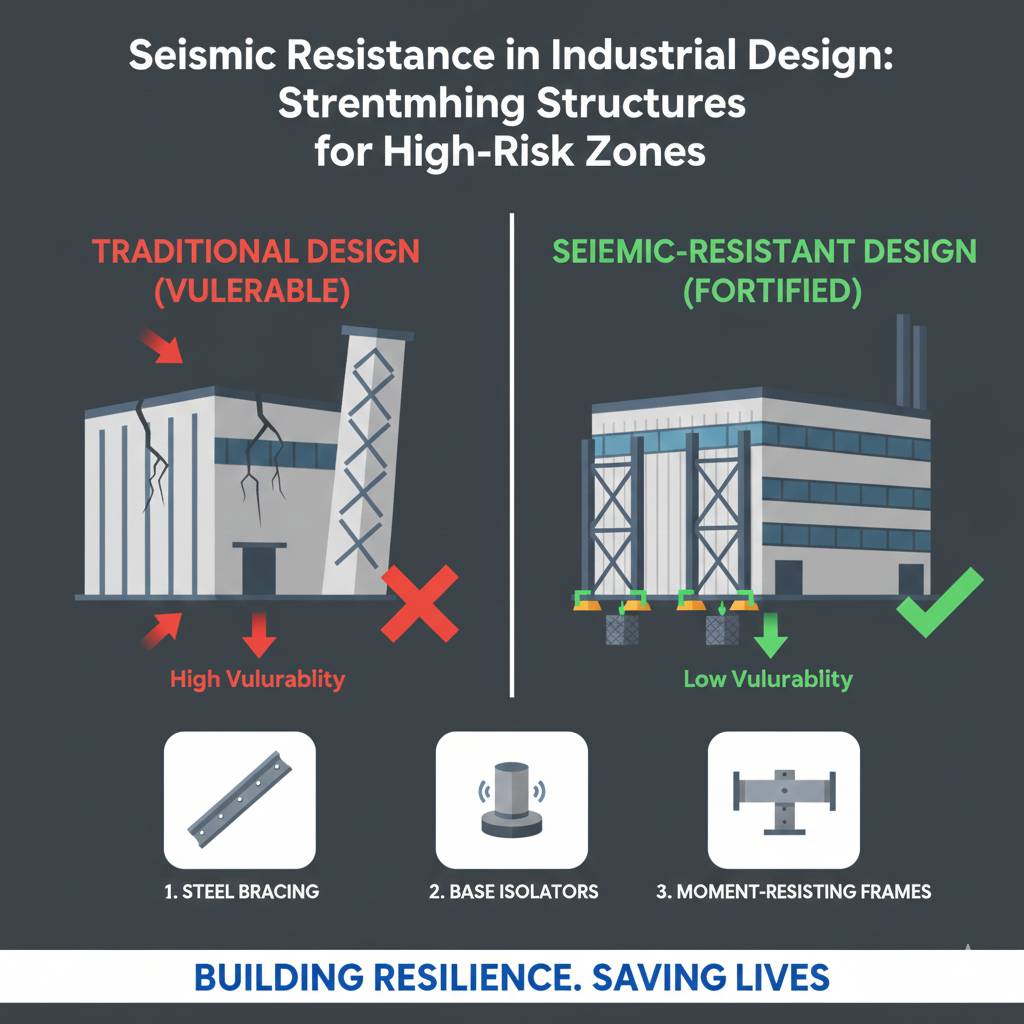
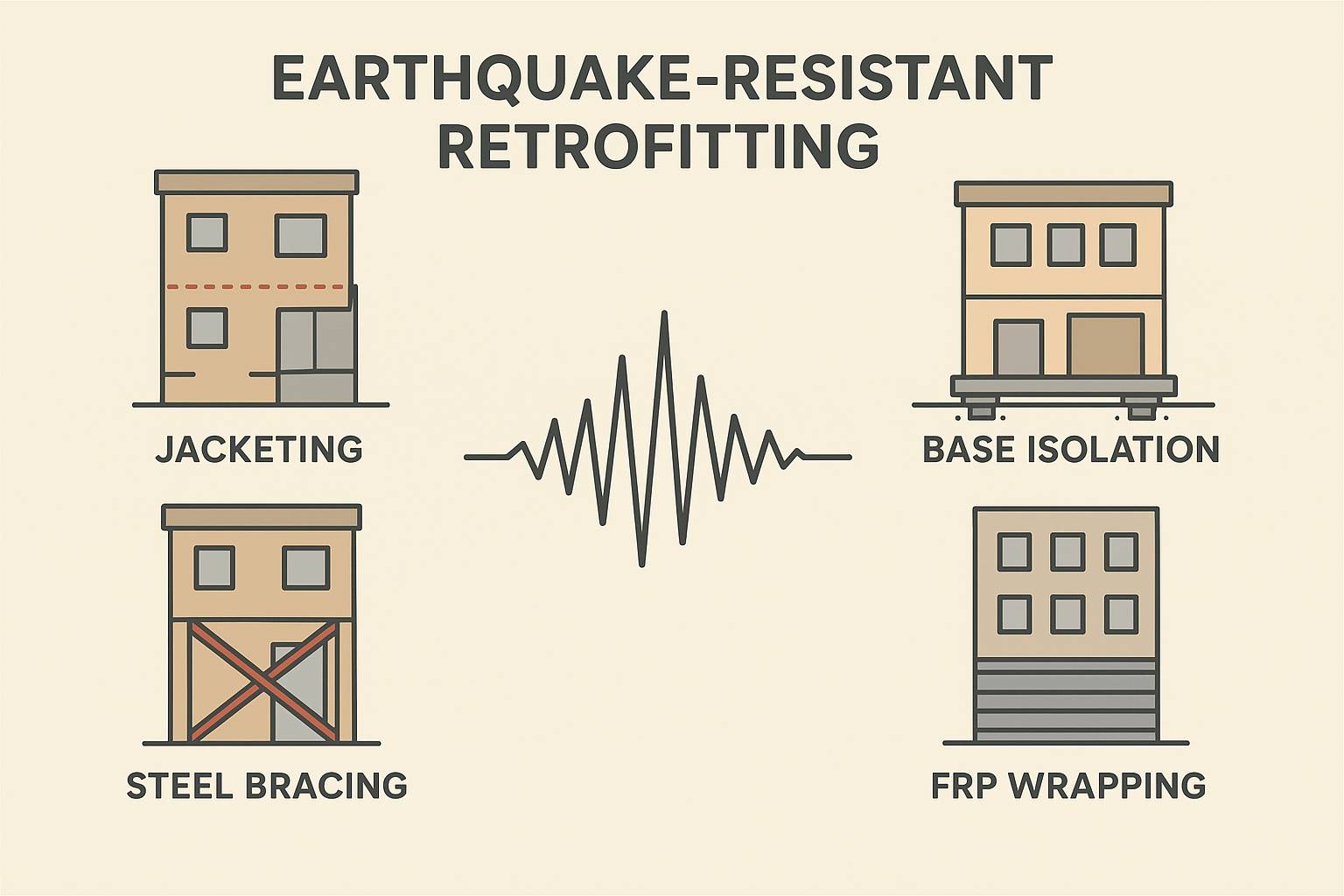
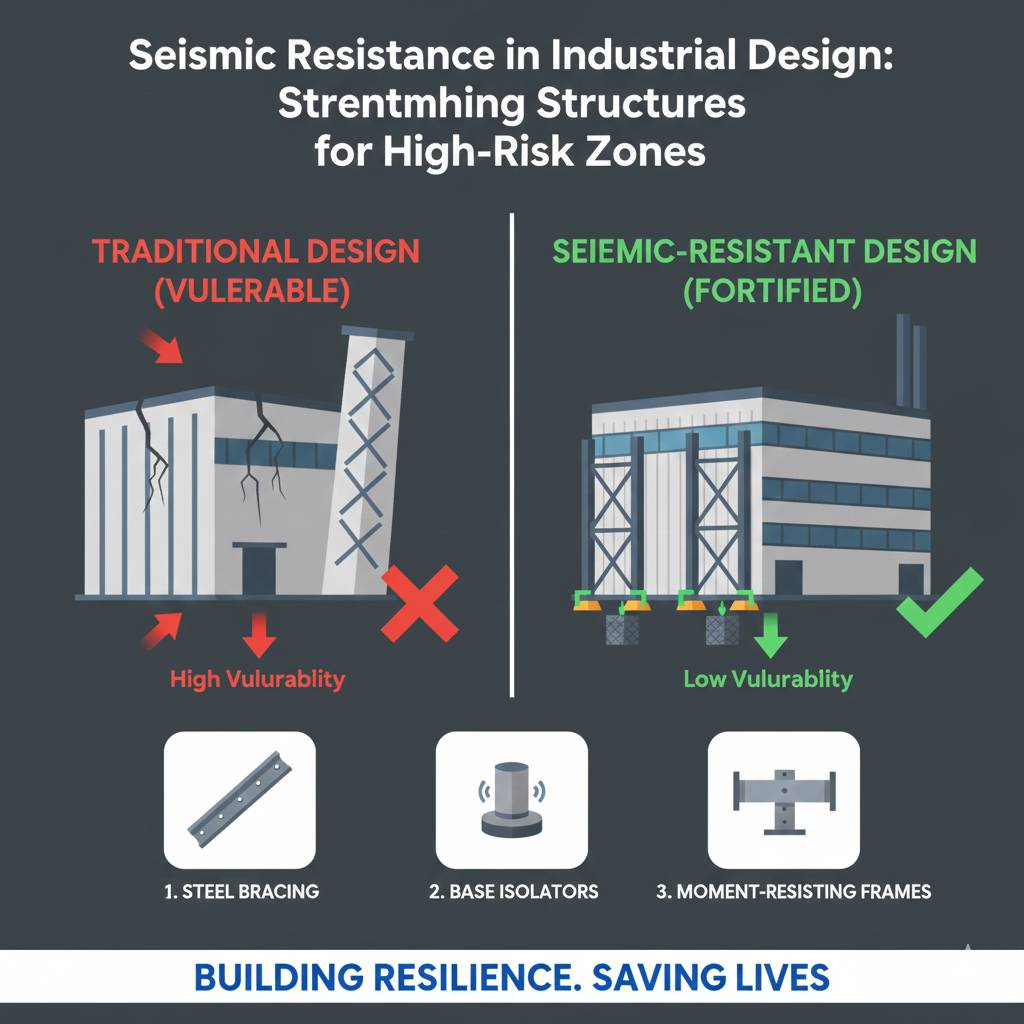
  • Base isolation systems
  • Energy dissipation devices
  • Performance-based design

These ensure minimal damage during earthquakes, protecting both lives and investments.

4. Sustainable and Green Building Practices

A true smart city cannot exist without sustainability.
Structural engineers promote:

  • Use of low-carbon materials
  • Efficient design geometry to minimize material waste
  • Integration of renewable energy systems within structural frameworks
  • Water-harvesting and waste-recycling systems

Rakhra Associates incorporates these in all designs, ensuring every project contributes to India’s net-zero emission goals.

5. Smart Transportation and Urban Mobility

Engineers design the physical backbone of smart mobility — flyovers, metro systems, and smart parking structures.
They apply computational fluid dynamics (CFD) and finite element modeling (FEM) to ensure structural safety, durability, and minimal congestion impact.

6. Digital Engineering and BIM (Building Information Modeling)

BIM is revolutionizing how structural projects are planned and executed.
Structural engineers use BIM to:

  • Coordinate between architects and service consultants
  • Detect design clashes early
  • Estimate lifecycle costs accurately
  • Visualize the entire structure digitally before construction

At Rakhra Associates, BIM is a cornerstone of modern project delivery, helping ensure quality, speed, and sustainability in every project.

7. Retrofitting and Revitalizing Old Infrastructure
Many Indian cities are evolving on top of aging foundations.
Structural engineers assess, retrofit, and reinforce old bridges, buildings, and industrial structures, enabling them to support new smart technologies safely.

8. Smart Water and Waste Infrastructure

From stormwater drainage to smart sewage systems, engineers ensure the load-bearing structures behind utilities are resilient and efficient.
Concrete channels, water treatment plants, and underground pipelines all rely on precise structural design to function effectively under varied conditions.

9. Energy-Efficient Structural Design

Smart cities thrive on energy optimization.
Structural engineers integrate:

  • Passive cooling systems
  • Daylight-optimized layouts
  • Solar-integrated facades
    These not only cut operational costs but also reduce carbon footprints.

10. Use of AI and IoT in Structural Monitoring

With IoT-based sensors, engineers can now monitor building performance in real time — tracking stress, vibrations, temperature, and humidity.
Artificial intelligence analyzes this data to predict potential issues before they arise, ensuring proactive maintenance.

Challenges Faced by Structural Engineers in Smart City Projects

While the vision is exciting, it’s not without hurdles:

  • Inconsistent data and digital infrastructure
  • Regulatory gaps in smart material usage
  • High project complexity due to interdisciplinary integration
  • Skill gap in adopting digital modeling and automation tools

Rakhra Associates addresses these by continuous training, adopting global codes, and collaborating closely with government smart city bodies.

The Smart City Mission and Engineering Standards in India

The Smart Cities Mission (SCM) emphasizes structural reliability and sustainability.
Structural engineers follow codes like:

  • IS 456:2000 – Plain and Reinforced Concrete
  • IS 1893:2016 – Earthquake Resistant Design
  • NBC 2016 – National Building Code

These ensure every smart city development meets global safety benchmarks.

Case Study: Chandigarh’s Smart City Progress

Chandigarh, known for its urban planning, is evolving into a model smart city.
Rakhra Associates has been actively involved in:

  • Retrofitting government offices for energy efficiency
  • Designing earthquake-resistant community centers
  • Developing RCC frameworks for solar infrastructure

Their work reflects how structural engineers are the unsung heroes powering India’s smart transformation.

The Future of Structural Engineering in Smart Cities

The next decade will see a fusion of AI, sustainability, and advanced materials in urban construction.
Structural engineers will evolve into data-driven decision-makers, using predictive analytics to design self-monitoring, self-healing, and self-adapting infrastructure.

Tomorrow’s smart cities will not just be built — they’ll evolve intelligently, guided by structural engineering innovations.

FAQs on the Role of Structural Engineers in Smart Cities

Q1. What is the main role of structural engineers in smart city projects?
They ensure that all structures are safe, durable, and capable of integrating smart technologies seamlessly.

Q2. How do smart materials influence structural design?
Smart materials like self-healing concrete enhance lifespan and reduce maintenance costs.

Q3. What tools do engineers use for smart city design?
BIM, IoT sensors, AI-driven analytics, and advanced modeling software like Staad.Pro and Tekla.

Q4. Are smart cities more expensive to build?
Initially, yes — but they save massive operational costs in the long term through sustainability and efficiency.

Q5. How does Rakhra Associates contribute to smart cities?
By integrating green design, digital engineering, and safety innovations in structural planning.

Q6. What’s the future of structural engineers in India?
They will lead the transition to automated, intelligent, and climate-resilient construction.

Conclusion

Structural engineers form the backbone of India’s Smart City revolution. From earthquake-resistant skyscrapers to energy-efficient infrastructure, their expertise ensures that innovation stands firm on reliable foundations.

With Rakhra Associates leading projects in Chandigarh and across North India, the dream of technologically empowered, sustainable urban spaces is becoming a reality — one smart structure at a time.

Categories
Construction Materials Structural Engineering

Smart Materials in Construction: The Future of Structural Engineering

Blog

Smart Materials in Construction: The Future of Structural Engineering


Smart Construction Materials

Introduction: The Dawn of Smart Construction

The construction industry is undergoing a silent revolution. Traditional concrete, steel, and glass are giving way to smart materials — substances engineered to respond to environmental changes and structural stresses. These futuristic materials promise stronger, safer, and more sustainable buildings, aligning with the growing global emphasis on smart infrastructure.

For firms like Rakhra Associates, pioneers in structural engineering in Chandigarh, integrating smart materials into design and execution marks a shift toward efficiency, safety, and innovation.

What Are Smart Materials in Construction?

Smart materials are advanced substances that can sense and react to their surroundings. Unlike conventional materials that remain passive, these materials adapt dynamically to temperature, stress, moisture, or load changes, maintaining structural performance and integrity over time.

Common Categories of Smart Materials:

  • Self-healing materials
  • Shape-memory alloys
  • Piezoelectric materials
  • Thermochromic glass
  • Carbon fiber-reinforced composites
  • Photovoltaic (solar-responsive) materials

Each of these materials plays a role in making buildings more resilient, energy-efficient, and intelligent.

The Evolution of Materials in Structural Engineering

The journey from simple clay and lime to carbon nanocomposites reflects centuries of innovation. Early builders focused on durability, while modern engineers emphasize adaptability.
Smart materials now bridge these goals — offering durability and real-time responsiveness.

As Rakhra Associates highlights, structural engineering is no longer about static design; it’s about creating living structures that learn, adapt, and heal.

Types of Smart Materials and Their Applications

1. Self-Healing Concrete

One of the most groundbreaking materials in modern construction, self-healing concrete contains bacteria or polymers that activate when cracks form. Upon contact with moisture, these agents produce limestone, sealing the crack naturally.
Benefits:

  • Extends lifespan by 30–50%
  • Reduces maintenance costs
  • Prevents water ingress and corrosion

Use Case: Bridges, tunnels, and water-retaining structures.

2. Shape-Memory Alloys (SMA)

SMAs, like Nitinol (Nickel-Titanium), can deform under stress but return to their original shape when heated. In structural applications, they help absorb seismic shocks and vibrations, making them ideal for earthquake-resistant buildings.

Rakhra Associates uses SMA-based dampers in high-rise structures across Chandigarh’s seismic zones.

3. Piezoelectric Materials

These materials generate electricity when subjected to pressure or vibration. When integrated into floors, roads, or walls, they can harvest energy from movement and convert it into usable power.

Application: Smart highways, kinetic floors, and vibration monitoring systems.

4. Thermochromic and Electrochromic Glass

Smart glass changes its transparency with temperature or electric current, reducing energy loads from air conditioning or lighting.
Advantages:

  • Enhances energy efficiency
  • Improves comfort and aesthetics
  • Supports green building certifications

5. Carbon Fiber Reinforced Polymers (CFRP)

Lightweight yet stronger than steel, CFRP composites are used for retrofitting and strengthening existing structures. Their high tensile strength and corrosion resistance make them perfect for bridges, heritage buildings, and towers.

Smart Materials and Sustainability

Smart materials align perfectly with the global sustainability agenda. They reduce waste, cut down energy consumption, and extend the life of structures.
For example:

  • Self-healing concrete minimizes CO₂ emissions by reducing cement demand.
  • Smart glass lowers HVAC energy use by up to 25%.
  • Piezoelectric floors generate renewable power in high-traffic zones.

As cities like Chandigarh move toward smart urban development, the role of such sustainable innovations becomes even more crucial.

Integration of Smart Materials in Structural Design

Incorporating smart materials requires advanced modeling, testing, and validation. Rakhra Associates employs BIM (Building Information Modeling) and Finite Element Analysis (FEA) to simulate how these materials behave under different environmental and loading conditions.

This ensures:

  • Accurate material performance predictions
  • Optimal cost-to-benefit ratios
  • Compliance with national and international standards

Challenges in Adopting Smart Materials

While promising, these technologies face challenges:

  • High initial costs compared to traditional materials
  • Lack of standard codes for design and testing
  • Limited local availability in emerging markets
  • Knowledge gaps among construction teams

However, as adoption grows and costs drop, experts predict that smart materials will become standard practice in the next decade.

Smart Materials in Indian Context

India, with its diverse climate zones and growing infrastructure needs, stands to benefit immensely from smart materials.
From self-healing roads in Mumbai to solar-integrated facades in Gurgaon, projects are already proving their worth.

Rakhra Associates envisions introducing these materials into Chandigarh’s commercial and institutional developments — building structures that are not only strong but also self-sustaining and intelligent.

The Future of Structural Engineering

Tomorrow’s buildings won’t just stand tall—they’ll communicate, adapt, and regenerate. Structural elements will report stress levels, bridges will self-repair, and roads will power streetlights.

As artificial intelligence merges with material science, the line between engineering and biology will blur. Structures will become ecosystems — learning and evolving over time.

The Role of Rakhra Associates in the Smart Revolution

With decades of experience in structural design and material innovation, Rakhra Associates is spearheading the transition to smart construction practices in North India.
By adopting new technologies and research-driven engineering, the firm ensures that every project contributes to a smarter, greener, and safer built environment.

FAQs on Smart Materials in Construction

Q1. What makes a material “smart”?
Smart materials can sense environmental changes and respond by altering their physical properties, such as stiffness, shape, or color.

Q2. Are smart materials expensive?
Initially, yes. But they drastically reduce lifecycle costs by minimizing maintenance and extending structural lifespan.

Q3. Which smart material is most commonly used today?
Self-healing concrete and carbon-fiber composites are among the most adopted in large-scale infrastructure.

Q4. Can smart materials be used in existing structures?
Yes. Retrofitting with CFRP or smart coatings is a popular method to upgrade old structures.

Q5. Are there Indian standards for smart materials yet?
While BIS hasn’t formalized all smart material codes, guidelines exist under IS 456 and SP 34 for integrating new materials.

Q6. How is Rakhra Associates using these materials?
By incorporating smart composites and monitoring systems in new RCC projects and retrofits across Chandigarh.

Conclusion

Smart materials are more than technological novelties — they are the foundation of the next generation of construction. By merging adaptability with sustainability, they redefine what’s possible in structural engineering.

With visionary firms like Rakhra Associates leading the way, Chandigarh and India as a whole are on the brink of a smart construction era, where every structure is designed not just to last—but to think, adapt, and evolve. For more information watch our videos on Rakhra Associates Instagram Channel. 

Categories
Structural Audits Structural Engineering

Cost vs. Safety: How Structural Audits Save Money in the Long Run

Blog

Cost vs. Safety: How Structural Audits Save Money in the Long Run


Structural Audits - Cost & Safety

Introduction to Structural Audits

In today’s fast-paced construction world, where deadlines and budgets dominate discussions, structural safety often becomes an afterthought. Yet, the real cost of ignoring it can be catastrophic. A structural audit acts as a preventive health check-up for buildings—detecting early signs of distress, corrosion, or design flaws that could otherwise lead to expensive repairs or, worse, structural collapse.

Rakhra Associates, one of the most trusted names in structural engineering in Chandigarh, emphasizes that investing in timely audits isn’t an expense—it’s an insurance policy for safety, compliance, and financial stability.

The Relationship Between Cost and Safety in Construction

Every project faces the classic dilemma: Should we spend more now for safety or save today and risk tomorrow?

While initial cost-cutting may seem smart, it often leads to higher maintenance and rehabilitation expenses down the line.

A structural audit bridges this gap by ensuring that safety standards are not compromised for short-term savings. It helps stakeholders make data-driven decisions—optimizing resources without gambling with the building’s life expectancy.

The True Cost of Neglecting Safety

Let’s face it—structural failures are not just accidents; they’re warnings ignored. Across India, several high-profile building collapses have occurred due to lack of routine inspection, poor detailing, or unverified modifications.

Consequences of Ignoring Structural Audits:

  • High repair costs due to corrosion and material degradation
  • Loss of property value and investor confidence
  • Legal liabilities from non-compliance with municipal safety norms
  • Risk to human life from sudden structural failures

A routine structural audit, which costs only a fraction of major repairs, can save millions in the long run.

What is a Structural Audit?

A structural audit is a detailed assessment of a building’s stability, strength, and safety. Conducted by qualified engineers, it identifies defects, deterioration, and potential hazards in the structural system.

Key Stages Include:

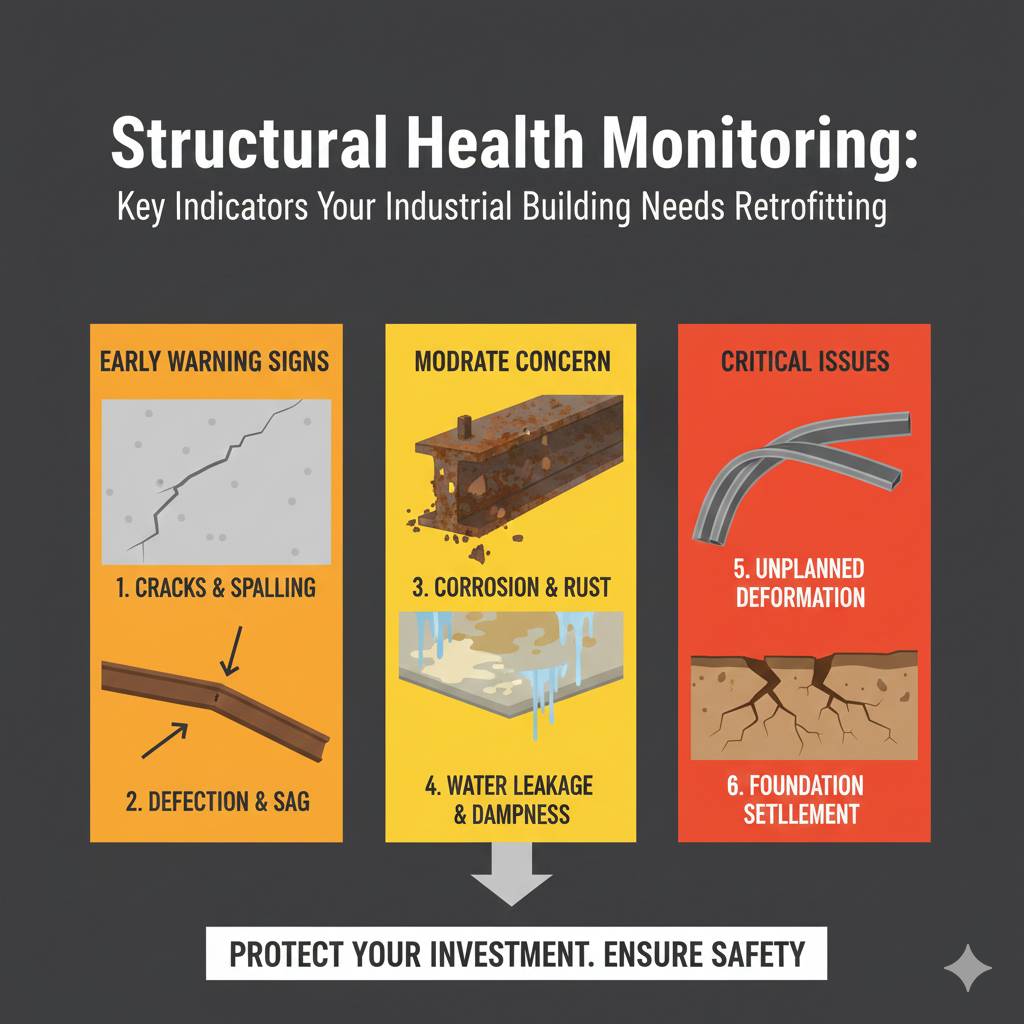
  1. Visual Inspection – Checking cracks, deflections, rusting, and dampness.
  2. Non-Destructive Testing (NDT) – Using ultrasonic pulse velocity and rebound hammer tests to assess concrete health.
  3. Load Analysis & Design Verification – Comparing actual conditions with design assumptions.
  4. Recommendations – Suggesting repair methods, retrofitting, or strengthening measures.

At Rakhra Associates, audits follow a systematic process aligning with the Indian Standard IS 456:2000 and IS 15988:2013 for concrete structures.

When Should You Conduct a Structural Audit?

Ideally, structural audits should be performed:

  • Every 5 years for buildings under 15 years old.
  • Every 3 years for older structures or those in seismic zones (like Chandigarh, Zone IV).

After renovations, heavy load additions, or natural events like earthquakes or floods.

By identifying early warning signs, audits help building owners plan repairs efficiently before small defects turn into costly crises.

How Structural Audits Save Money

  1. Preventive Maintenance Over Reactive Repairs
    Early detection allows for low-cost fixes instead of expensive overhauls later.

  2. Extended Lifespan of Structures
    With proper audit-based maintenance, structures can serve decades longer.

  3. Reduced Downtime and Liability Costs
    Audited buildings face fewer shutdowns and legal issues, ensuring steady revenue.

  4. Better Asset Valuation
    Certified safety and durability enhance property market value and investor trust.

As Rakhra Associates highlights, a single audit can help avoid repair bills worth 10–20 times its cost.

Common Structural Issues Detected in Audits

  • Concrete spalling and rusting of rebars
  • Foundation settlement and wall cracking
  • Overloaded slabs and beams
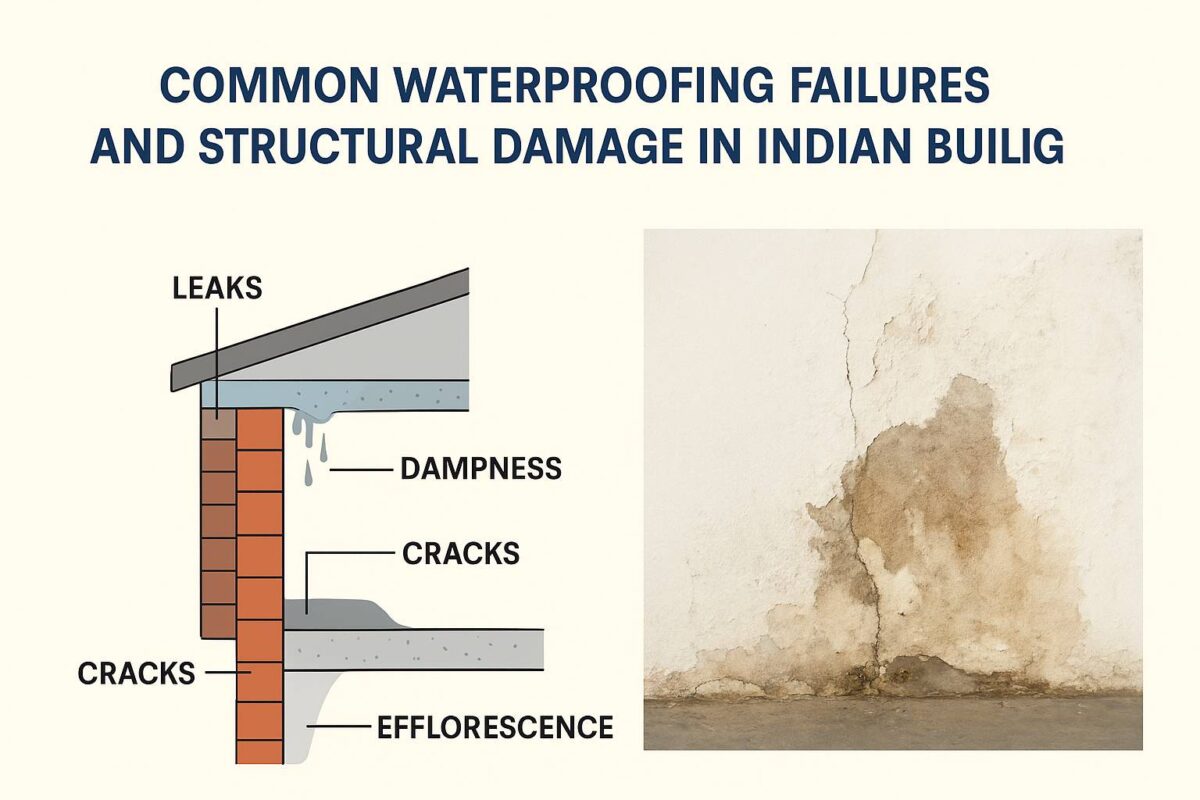
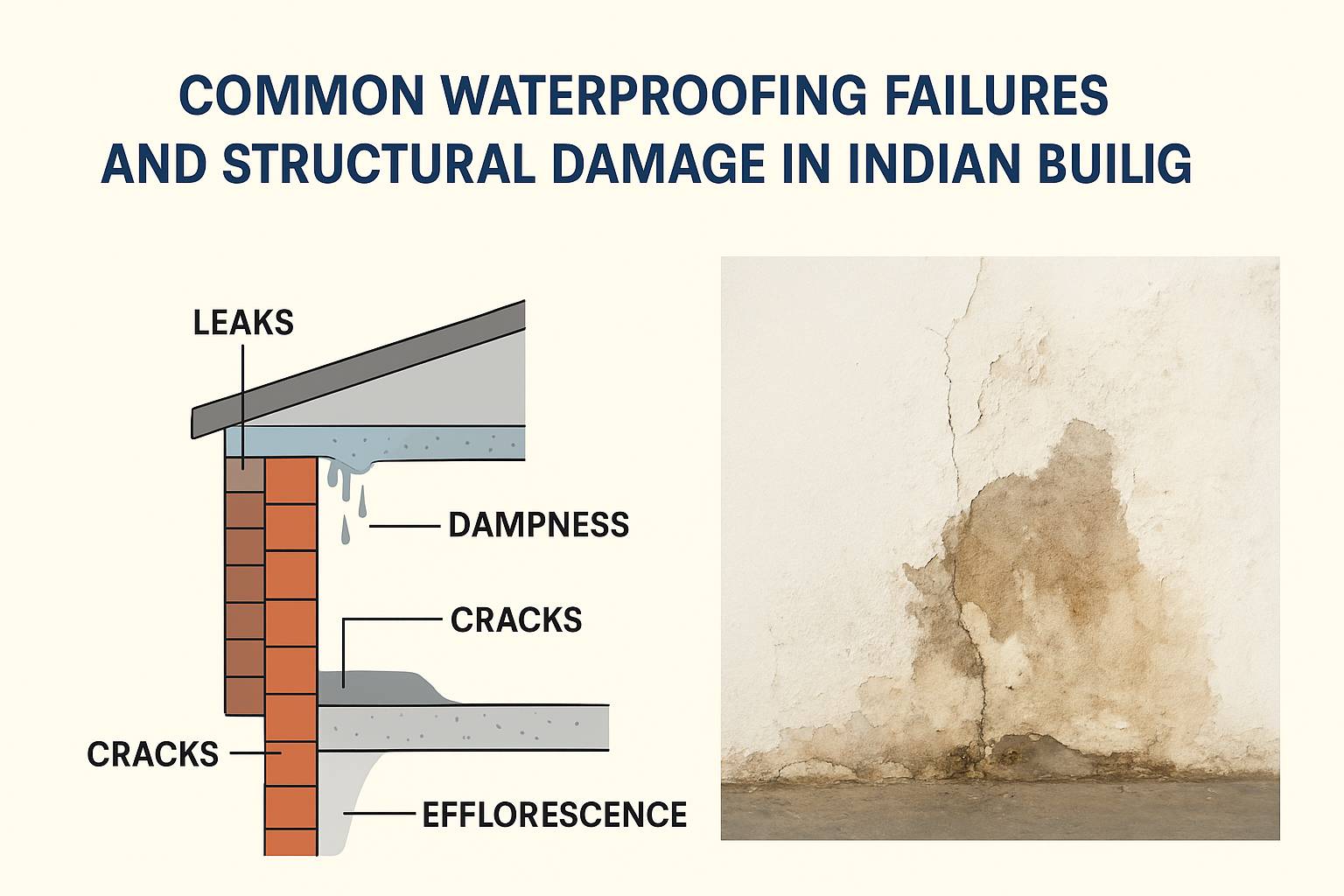
  • Poor waterproofing leading to corrosion
  • Structural damage from alterations without design validation

By identifying these early, structural engineers prevent major failures and financial strain.

Role of Structural Engineers in Auditing

Structural engineers bring technical expertise and analytical precision to every audit. They don’t just identify visible issues—they assess load paths, design adequacy, and material strength.

At Rakhra Associates, engineers use advanced tools like Revit, AutoCAD, and Staad.Pro for analysis, ensuring comprehensive documentation and clear visual reporting for clients.

Case Study: How Rakhra Associates Helped a Chandigarh Housing Complex Save Millions

A prominent residential complex in Chandigarh recently engaged Rakhra Associates for a structural audit after noticing cracks in several beams. The audit revealed corrosion due to water seepage—caught before any structural weakening occurred.
The cost of repairs? Less than ₹2 lakhs.
The potential cost of failure? Over ₹40 lakhs in damages and resident relocation.
A clear example of how proactive audits save both lives and money.

Legal Importance and Compliance

Municipal corporations in major Indian cities now mandate structural audits for buildings above 15 years of age. Failure to comply can lead to hefty penalties or demolition notices.

Audits also ensure compliance with:

  • National Building Code (NBC) of India
  • IS 456:2000 (Concrete Structures)
  • IS 15988:2013 (Retrofitting of Structures)

Technological Innovations in Structural Auditing

Modern auditing tools are redefining accuracy and speed. Engineers today use:

  • Drones for facade inspection
  • Thermal imaging for moisture detection
  • AI-based predictive analytics to forecast deterioration
  • BIM (Building Information Modeling) for 3D visualization and report integration

Rakhra Associates integrates these technologies to deliver smarter, faster, and more reliable structural audit solutions.

How Much Does a Structural Audit Cost?

Audit costs depend on building size, type, and condition. However, as a benchmark:

  • Small residential buildings: ₹20,000–₹50,000
  • Commercial complexes: ₹1–₹5 lakh
  • Industrial or heritage structures: ₹5 lakh and above

Compared to the cost of reconstruction or failure, audits are an incredibly affordable investment.

FAQs on Structural Audits

Q1. What is the purpose of a structural audit?
To assess a building’s structural health, safety, and durability, ensuring it remains safe for occupancy.

Q2. Who can conduct a structural audit?
Only licensed structural engineers or firms like Rakhra Associates certified under relevant IS codes.

Q3. How often should audits be done?
Every 3–5 years, depending on the building’s age and exposure to environmental factors.

Q4. Are structural audits mandatory in Chandigarh?
Yes. Municipal bylaws and housing authorities recommend audits for buildings over 15 years old.

Q5. What happens if a building fails an audit?
The engineer provides recommendations for strengthening or retrofitting the structure to restore safety.

Q6. Can structural audits reduce insurance premiums?
Yes, many insurance companies offer lower premiums for certified safe buildings.

Conclusion

Balancing cost and safety isn’t about choosing one over the other—it’s about smart planning. A structural audit ensures your building remains strong, compliant, and financially efficient.

With the expertise of Rakhra Associates – Structural Engineers in Chandigarh, property owners gain peace of mind knowing that every structure they oversee stands the test of time—safely, efficiently, and economically.

Categories
Rebar Detailing Structural Engineering

Understanding Rebar Detailing: The Backbone of RCC Structures

Blog

Understanding Rebar Detailing: The Backbone of RCC Structures


Rebar Detailing in Chandigarh

Introduction to Rebar Detailing

In the world of civil engineering, Rebar Detailing is often called the “skeleton of concrete.” It’s the invisible yet indispensable framework that gives Reinforced Cement Concrete (RCC) its strength and durability. For firms like Rakhra Associates, one of the most trusted structural engineering consultancies in Chandigarh, precision in rebar detailing defines the safety and longevity of every project they design.

Why Rebar Detailing is Crucial for RCC Structures in Chandigarh

Rebar, or reinforcement steel, acts as the tensile backbone of RCC. While concrete excels under compression, it’s weak in tension. Rebars bridge this gap by absorbing tensile forces, making the structure robust under various loads — whether it’s an earthquake, wind pressure, or the dead load of the building itself.

Key Benefits:

  • Prevents cracking under tension
  • Ensures proper load transfer between members
  • Enhances ductility, making the structure more earthquake-resistant
  • Helps maintain structural integrity over decades

Without accurate detailing, even the best concrete mix can fail to perform as intended.

The Science Behind Reinforced Cement Concrete (RCC)

RCC is a composite material that relies on the bond between steel and concrete. The thermal compatibility and rough surface of rebars help concrete adhere firmly, allowing both materials to act as one. The precision of this bond depends largely on how well rebar is detailed, bent, and placed during construction.

Components of Rebar Detailing

Rebar detailing isn’t just about placing steel bars randomly — it involves an intricate process that covers:

  • Bar Bending Schedule (BBS): A tabular representation of bar types, lengths, and shapes.
  • Rebar Placement Drawings: Clear layouts showing where and how each bar should be positioned.
  • Cover Details: Ensuring adequate spacing to protect rebars from corrosion and fire damage.

These details directly impact the cost, strength, and life span of any RCC structure.

Understanding Bar Bending Schedule (BBS)

The BBS is the heart of detailing. It lists every rebar’s diameter, shape, length, and quantity — ensuring minimal wastage and easy onsite verification. Engineers at Rakhra Associates use advanced software to generate BBS automatically, reducing human error and speeding up project execution.

Common Rebar Shapes and Codes

In India, IS 2502:1963 and IS 456:2000 serve as guiding standards for bar bending and detailing. Common shapes include:

  • Stirrups for shear reinforcement
  • Hooks and bends for anchorage
  • Spiral bars for columns

Each must meet precise length and angle specifications for effective performance.

The Process of Rebar Detailing

The process begins with structural drawings from the design team. From there, detailers translate these into rebar shop drawings using CAD software. Coordination between architects, engineers, and contractors is critical to avoid clashes and ensure feasibility.

Role of Structural Engineers in Detailing

Structural engineers like those at Rakhra Associates play a vital role by validating load paths, checking bar spacing, and ensuring compliance with IS codes. Their expertise guarantees that the design intent matches execution on-site.

Common Tools and Software Used

Modern detailing relies on digital tools such as:

  • AutoCAD – for 2D drafting
  • Tekla Structures – for 3D rebar modeling
  • Revit – for BIM coordination
  • Staad.Pro – for analysis and verification

These tools help deliver precise, clash-free, and code-compliant rebar drawings.

Rebar Detailing Standards and Codes in India

Rebar detailing in India follows IS 456:2000 (general RCC design) and IS 2502:1963 (bending and placement). Other supporting codes include IS 1786 for rebar properties and SP 34 for detailing guidelines. These ensure safety, economy, and uniformity across projects.

Common Mistakes in Rebar Detailing and How to Avoid Them

Even experienced teams can make errors like:

  • Inaccurate bar lengths or overlaps
  • Missing rebar in high-stress zones
  • Incorrect cover dimensions

Prevention Tips:

  • Double-check BBS before fabrication
  • Use 3D clash detection tools
  • Conduct site-level cross-verification

Best Practices for Accurate Rebar Detailing

To ensure accuracy:

  • Follow IS code standards strictly
  • Use standardized bar symbols and notations
  • Maintain communication between design and site teams

Always verify the BBS with physical site measurements

Rebar Detailing in Modern Construction Projects

From residential buildings to complex infrastructure, rebar detailing ensures every beam, slab, and column performs reliably. In Chandigarh’s evolving skyline, Rakhra Associates has been instrumental in designing RCC structures that combine strength with architectural elegance.

Case Study – Chandigarh’s Structural Growth

Over the past decade, Chandigarh has seen a surge in RCC-based projects. Firms like Rakhra Associates have led the way by implementing advanced rebar detailing and quality assurance systems, ensuring every structure meets seismic safety standards specific to Zone IV (North India region).

Future Trends in Rebar Detailing

The future lies in automation and BIM-based detailing. Tools now allow engineers to visualize every bar in 3D before construction. AI-assisted clash detection, sustainable steel usage, and digital twin integration are revolutionizing how detailing is done.

FAQs on Rebar Detailing

Q1. What is rebar detailing in RCC structures?
Rebar detailing is the process of preparing detailed drawings and schedules for placing reinforcement bars in concrete structures.

Q2. Why is rebar detailing important?
It ensures the structure can safely handle loads and prevents construction errors.

Q3. What software do engineers use for detailing?
AutoCAD, Tekla, and Revit are the most widely used tools.

Q4. What are the IS codes relevant to rebar detailing?
IS 456:2000 and IS 2502:1963 are the main references.

Q5. How does Rakhra Associates ensure quality in detailing?
By combining experienced engineering judgment with advanced software verification.

Q6. What’s the biggest challenge in rebar detailing?
Maintaining accuracy and coordination between design and on-site execution.

Conclusion

Rebar detailing is truly the backbone of RCC structures, blending art and engineering precision. With the expertise of Rakhra Associates, Chandigarh’s structural landscape stands tall — a testament to the power of accuracy, innovation, and engineering excellence.

Read more structural engineering blogs

Categories
Structural Audits Structural Damage Structural Engineering Structural Engineering Mistakes

Top Structural Engineering Mistakes in Construction Projects – And How to Avoid Them

Blog

Top Structural Engineering Mistakes in Construction Projects – And How to Avoid Them


Structural Engineering Mistakes in Construction Projects

Introduction

Even the most well-planned construction projects can face serious setbacks if structural engineering isn’t executed correctly. From foundation failures to inadequate load-bearing designs, small mistakes can lead to costly repairs, safety hazards, and in severe cases — structural collapse.

At Rakhra Associates, one of the leading teams of structural engineers in Chandigarh and Punjab, we’ve seen firsthand how common missteps in structural design and execution can derail entire projects. In this blog, we’ll explore the top structural engineering mistakes often encountered during construction and offer expert advice on how to avoid them.

Whether you’re a builder, architect, or project owner, understanding these pitfalls can save time, money, and lives.

1. Inadequate Site Investigation

The Mistake:
Many construction teams begin design without proper geotechnical surveys or soil tests. This results in foundation mismatches, differential settlements, or even collapse due to weak bearing capacity.

How to Avoid It:

  • Conduct comprehensive soil testing before any design or excavation begins. 
  • Include hydrology, slope stability, and ground water analysis as needed. 
  • Work with experienced structure engineers in Mohali or Chandigarh for accurate site evaluation reports.

2. Ignoring Load Path and Load Transfer

The Mistake:

Misunderstanding how loads travel through a structure — from slabs to beams, columns, and finally to foundations — leads to overloaded members or unexpected stress points.

How to Avoid It:

  • Create a clear and continuous load path in structural design.
  • Verify it with load simulations using structural software like ETABS or STAAD.
  • Always design with seismic and wind loads (IS 875 and IS 1893) in mind, especially in high-risk zones like Punjab.

3. Overlooking Seismic Design Requirements

The Mistake:

Ignoring or downplaying seismic loads, especially in places like Chandigarh (Zone IV), results in structural brittleness and failure during earthquakes.

How to Avoid It:

  • Follow IS 1893 and IS 13920 for earthquake-resistant design.
  • Use ductile detailing and proper joint reinforcement.
  • Incorporate shear walls or braced frames for lateral resistance.

4. Inadequate Reinforcement Detailing

The Mistake:

Even well-designed structures fail due to poor rebar placement, anchorage, and spacing. Common issues include:

  • Congested reinforcement at beam-column joints

  • Inadequate development length

  • Incorrect lap splice locations

How to Avoid It:

  • Adhere strictly to IS 456:2000 and IS 2502 reinforcement detailing guidelines.
  • Use BBS (Bar Bending Schedule) for accurate quantity estimation and execution.
  • Supervise reinforcement works through regular structural audits by qualified engineers.

5. Improper Column and Beam Sizing

The Mistake:

Columns or beams that are under-designed or irregularly spaced can cause localized stress, cracking, or long-term deflections.

How to Avoid It:

  • Design columns and beams to suit all load combinations, including dead, live, seismic, and wind.
  • Avoid abrupt section changes between floors.
  • Use structural modeling tools to simulate real-world behavior before construction.

6. Use of Outdated or Incompatible Materials

The Mistake: Using materials that don’t meet current IS codes or mixing materials (e.g., different concrete grades or types of steel) without proper design consideration can weaken structural integrity.

How to Avoid It:

  • Source materials from approved vendors.
  • Verify material properties through lab testing.
  • Ensure compatibility in mixed-use designs (e.g., PEB + RCC).

7. Poor Structural Coordination with Architectural Plans

The Mistake:

Structural and architectural designs that don’t align can result in:

  • Columns in undesirable locations
  • Beam clashes with HVAC or plumbing
  • Alterations on site that compromise structural stability

How to Avoid It:

  • Engage in early coordination between architects and structure engineers.
  • Use BIM (Building Information Modeling) for integrated design review.
  • Avoid last-minute architectural changes once structural plans are finalized.

8. Neglecting Structural Audits in Existing Buildings

The Mistake:
Renovating, expanding, or repurposing old structures without a structural audit often leads to failures due to unknown load capacities or undetected damage.

How to Avoid It: 

  • Conduct a thorough structural audit before making changes to old buildings.
  • Use non-destructive testing (NDT) methods for accurate assessment.
  • Rakhra Associates offers detailed structural audits across Punjab for both residential and commercial properties.

9. Not Accounting for Differential Settlement

The Mistake:

In large or unevenly loaded structures, differential settlement (one part sinking more than others) can cause cracks, tilts, or even collapse.

How to Avoid It:

  • Use proper soil stabilization methods and select suitable foundation types (raft, pile, etc.).
  • Perform load balancing and provide expansion joints where needed.
  • Monitor settlement post-construction using sensors or manual surveys.

10. Lack of Quality Supervision During Execution

The Mistake:

On-site mistakes such as:

  • Incorrect formwork removal timing
  • Poor concrete compaction
  • Missing cover blocks or ties are often due to unskilled labor or lack of site supervision.

How to Avoid It:

  • Appoint experienced site engineers or third-party structural consultants.
  • Conduct regular site inspections at key stages (foundation, slab casting, beam-column joints).
  • Train workers on structural importance and safe practices.

Final Thoughts: Why Rakhra Associates Prioritizes Prevention

At Rakhra Associates, we’ve helped numerous projects across Chandigarh, Mohali, and Punjab avoid costly mistakes through robust design principles, peer reviews, and structural audits. Our team believes that preventing structural errors is far more efficient than correcting them.

Whether it's designing high-rise commercial towers or auditing aging buildings for safety, we ensure that every project meets not just IS codes, but exceeds industry benchmarks in quality and resilience.

Categories
Column Designing Structural Engineering

Optimizing Column Design in Multi-Storey Buildings: From Basics to Advanced Strategies

Blog

Optimizing Column Design in Multi-Storey Buildings: From Basics to Advanced Strategies


Column Design in Multi-Storey Buildings

Introduction

In modern architecture and structural engineering, the significance of column design in multi-storey buildings cannot be overstated. Columns are the primary vertical structural elements responsible for safely transferring loads from slabs and beams down to the foundation. Their design affects not just the stability and safety of the structure but also impacts the space utilization, construction cost, and architectural freedom.

Whether it's a residential apartment complex, commercial skyscraper, or institutional high-rise, optimizing column design plays a vital role in ensuring structural integrity. As leading structural engineers in Chandigarh and Mohali, Rakhra Associates has been at the forefront of delivering efficient, economical, and code-compliant column design solutions tailored to the diverse needs of builders and developers across Punjab.

In this blog, we’ll explore the fundamentals of column design, evolving trends, advanced design strategies, and key considerations for multi-storey buildings.

1. What Are Columns and Why Are They Important?
Columns are vertical compression members that transfer the building’s weight (dead load), occupancy (live load), and environmental forces (wind, seismic) to the foundation. Their effectiveness lies in:

  • Load-bearing capacity – columns carry and redistribute loads
  • Stability – they resist buckling and lateral displacement
  • Alignment – columns align with architectural plans and floor heights
  • Safety – poorly designed columns are often the cause of catastrophic failures

2. Types of Columns in Multi-Storey Buildings

Understanding column classification helps optimize design:

A. Based on Shape

  • Rectangular columns – most common in RCC buildings
  • Circular columns – used for aesthetics and in pile foundations
  • L-shaped/T-shaped – used near boundaries or walls

B. Based on Loading

  • Axially loaded columns – direct compression
  • Eccentrically loaded columns – include bending and torsion

C. Based on Material

  • Reinforced Cement Concrete (RCC) Columns
  • Steel Columns
  • Composite Columns – steel + concrete

D. Based on Slenderness

  • Short Columns – fail due to crushing

Long Columns – prone to buckling

3. Column Design: Key Parameters

To design columns that are strong yet economical, structural engineers evaluate:

3.1 Axial Load and Bending Moments

  • Columns in corner and edge positions bear higher loads and bending moments.
  • Load combinations (DL + LL + WL/EL) as per IS 456:2000 and IS 1893:2016 are essential for design.

3.2 Slenderness Ratio

  • Short columns are preferred due to their better load-bearing efficiency.
  • Slender columns may require lateral bracing and higher reinforcement.

3.3 Cross-sectional Dimensions

  • Minimum dimensions (e.g., 9”x12” or 300mm x 450mm for RCC) vary by number of storeys and load intensity.
  • Square sections are preferred in seismic zones for uniformity in both directions.

3.4 Effective Length

  • Affected by end conditions and bracing.
  • Critical for buckling analysis.

3.5 Reinforcement Detailing

  • Minimum 4 bars (for square/circular) or 6 bars (for rectangular) as per IS codes.
  • Adequate lateral ties and spacing to prevent buckling of reinforcement.

4. Column Layout Planning – The First Step Toward Optimization

Optimal column layout directly affects:

  • Structural symmetry – aids in uniform load distribution
  • Architectural design – maximizes open space and usable floor area
  • Cost-effectiveness – minimizes reinforcement and concrete usage
  • Seismic performance – symmetry improves behavior during earthquakes

Tips:

  • Align columns vertically through all floors.
  • Avoid abrupt changes in column orientation or dimensions.
  • Maintain adequate spacing (typically 3–6 meters center-to-center).

5. Advanced Design Strategies for Columns in High-Rise Structures

5.1 High-Strength Materials

  • Use of M40+ concrete and Fe500D steel improves load capacity.
  • Reduces column cross-section, allowing for more usable space.

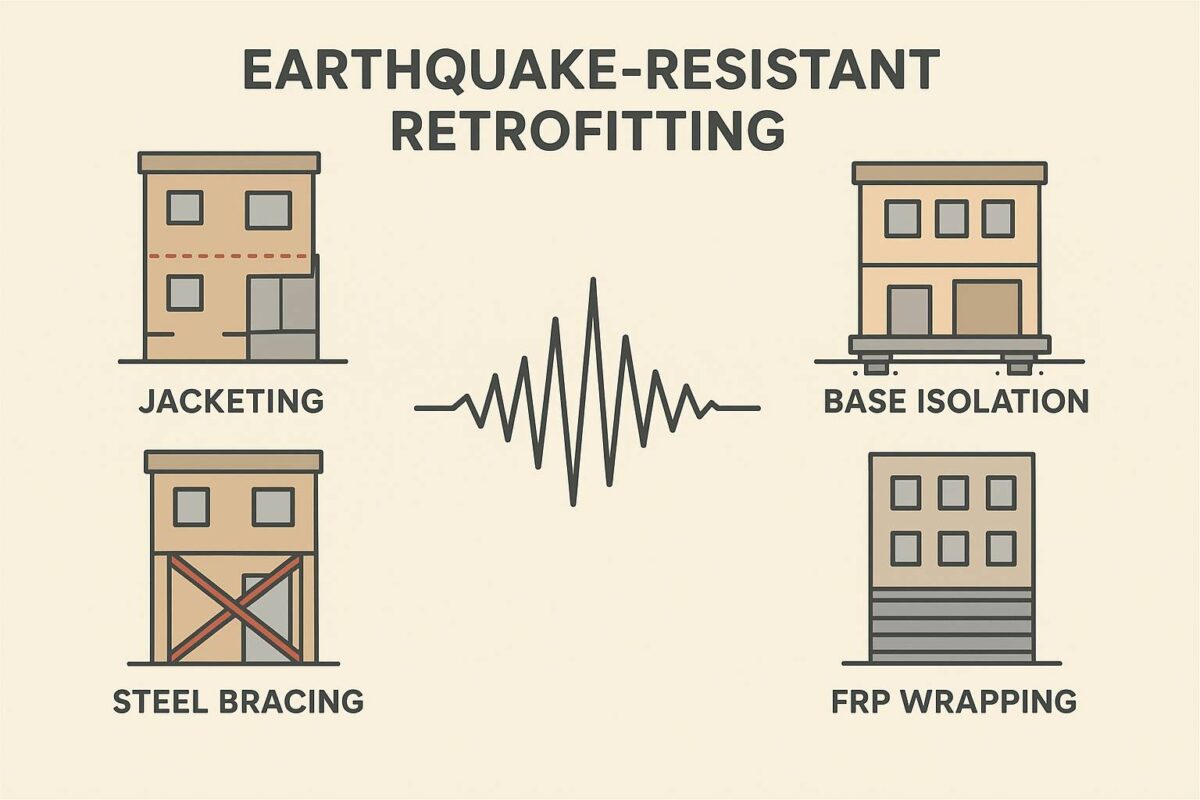
5.2 Column Jacketing & Retrofitting

  • Concrete jacketing or steel jacketing is used in retrofitting for strengthening existing columns.
  • Crucial for older buildings undergoing vertical expansion or post-earthquake repairs.

5.3 Composite Columns

  • Steel section embedded in concrete = high axial load capacity + better ductility.
  • Common in commercial or industrial buildings.

5.4 Post-Tensioned Columns

  • Used in performance-based design for tall buildings.
  • Reduces material usage and column size.

5.5 Buckling-Restrained Braced Frames (BRBFs)

  • Lateral load-resisting system with superior energy dissipation.
  • Reduces demand on columns in seismic-prone areas.

6. Seismic Considerations for Column Design in India

In India, cities like Chandigarh and Mohali lie in seismic Zone IV. Column design must address:

  • Ductility: Provide adequate confinement (closely spaced ties or spirals)

  • Moment-resisting frames: Columns must resist lateral loads efficiently

  • Avoid soft storeys: Ground floor columns must be strong enough to resist drift

IS 13920:2016 lays down earthquake-resistant provisions for ductile design of RCC structures.

7. Code References and Guidelines

Primary IS Codes for Column Design:

  • IS 456:2000 – RCC design and detailing

  • IS 13920:2016 – Seismic design

  • IS 875 (Part 1 to 5) – Load considerations

  • IS 1893:2016 – Earthquake loads

Compliance with these ensures safety, quality, and serviceability.

8. Software Tools for Optimized Column Design

Modern structural engineering firms like Rakhra Associates use software like:

  • STAAD.Pro

  • ETABS

  • SAFE

  • REVIT STRUCTURE

  • AutoCAD Structural Detailing
  • These tools enable accurate modeling, load analysis, and 3D visualization for precision column design.

9. Common Mistakes to Avoid in Column Design

  • Ignoring lateral loads (especially in tall buildings)

  • Poor reinforcement detailing

  • Inadequate concrete cover (risk of corrosion)

  • Improper alignment leading to torsional moments

  • Abrupt changes in column sizes across floors

10. Structural Audits: Ensuring Columns Perform for Life

Many buildings collapse due to neglected column integrity. Periodic structural audits by experienced structural engineers in Chandigarh like Rakhra Associates help:

  • Identify cracks or distress in columns

  • Evaluate load capacity for future expansions

  • Suggest retrofitting or strengthening measures

  • Ensure compliance with current codes

Conclusion: The Rakhra Approach to Optimized Column Design

At Rakhra Associates, we believe that optimized column design is a blend of engineering precision, code compliance, and creative problem-solving. Our team of qualified structure engineers in Mohali and Chandigarh works with developers, architects, and builders across Punjab to ensure column design meets the highest safety and performance standards.

From basic residential structures to complex multi-storey commercial projects, we integrate innovation, analysis, and field experience to deliver excellence in structural engineering.

Categories
Structural Audits Structural Engineering

The Role of Structural Audits in Ensuring Building Safety and Compliance

Blog

The Role of Structural Audits in Ensuring Building Safety and Compliance


Role of Structural Audits in Ensuring Building Safety and Compliance

Introduction

As cities expand and buildings age, the importance of structural safety has never been more critical. Every year, India witnesses dozens of tragic structural failures—many of which could have been prevented with timely intervention.

That’s where structural audits come in. They are not just a legal necessity in many cases, but also a responsible and proactive measure for the safety of occupants and the longevity of the structure.

At Rakhra Associates, a trusted name among structural engineers in Chandigarh, Mohali, and Punjab, we specialize in comprehensive structural audits for residential, commercial, industrial, and institutional buildings. In this blog, we break down what a structural audit is, why it matters, when it is required, and how it benefits all stakeholders.

What Is a Structural Audit?

A structural audit is a systematic inspection and evaluation of a building’s structural system—columns, beams, slabs, foundations, walls, and connections—to assess its safety, health, and stability.

It involves:

  • Visual inspection

  • Non-destructive testing (NDT)

  • Load and stress analysis

  • Structural drawings review

  • Reporting with actionable recommendations

It is typically conducted by certified structural engineers or consultants who are registered with professional bodies like COA or IEI.

Why Are Structural Audits Important?

✅ 1. Ensures Safety of Occupants

The primary goal is to ensure that the building is structurally sound and safe for living, working, or industrial activities. This is especially important for old buildings (15+ years), structures near construction zones, and those showing signs of distress.

✅ 2. Prevents Unexpected Collapses

Many buildings that collapse show warning signs—cracks, rusted reinforcements, water seepage, sagging slabs—that go unnoticed until it’s too late. A structural audit helps identify and fix these before disaster strikes.

✅ 3. Complies with Local Government Laws

In many Indian states including Maharashtra and Delhi, structural audits are mandatory for buildings over 30 years old. Municipal bodies like MC Chandigarh, GMADA, and others are increasingly moving towards similar regulations.

✅ 4. Saves Cost in the Long Run

Timely identification of structural weaknesses allows for early repairs, preventing expensive reconstruction or litigation due to accidents.

✅ 5. Essential for Building Renovation, Sale, or Insurance

Structural audit reports are often required when:

  • Renovating or modifying a building

  • Selling older properties

  • Applying for building insurance or claiming damage

When Should a Structural Audit Be Conducted?

  • Building is 15–30 years or older

  • Visible cracks, seepage, corrosion, or deformations

  • After natural disasters like earthquakes or floods

  • Nearby heavy construction or excavation activities

  • Before major retrofits or change in usage

  • For compliance with municipal bylaws

At Rakhra Associates, we recommend audits every 5–10 years depending on the building type and condition.

What Does a Structural Audit Cover?

A structural audit includes the following:

🔍 1. Visual Inspection

  • Wall cracks (horizontal/vertical/diagonal)

  • Water seepage or dampness

  • Corroded steel bars

  • Deflected beams or sagging slabs

  • Plaster peeling or disintegration

🧪 2. Non-Destructive Testing (NDT)

  • Rebound Hammer Test: Assesses surface strength of concrete

  • Ultrasonic Pulse Velocity Test (UPV): Checks internal flaws

  • Cover Meter Test: Measures concrete cover over steel

  • Half Cell Potential Test: Detects corrosion potential in rebars

  • Core Cutting Test: For compressive strength testing (partially destructive)

📐 3. Structural Design Review

  • Cross-checking original architectural and structural drawings

  • Verifying if construction followed approved designs

  • Analyzing if current loads/stresses exceed design capacity

📄 4. Final Report and Recommendations

  • Grading of structural health (Safe / Requires Repair / Unsafe)

  • Suggested actions: minor repairs, retrofitting, or demolition

  • Estimated repair costs and timelines

  • Safety certification (if applicable)

Structural Audits in Chandigarh, Mohali & Punjab – Local Guidelines

While Chandigarh MC and Punjab Mandi Board do not yet have mandatory structural audit rules for all buildings, they do require stability certificates from structural engineers for:

  • Building Plan Approvals

  • Completion Certificates

  • Occupancy Certificates (OC)

  • Redevelopment Projects

Hence, a detailed structural audit can help owners obtain these certificates smoothly.

Who Should Conduct Structural Audits?

Only qualified structural engineers, preferably with experience in similar types of buildings, should be hired.

Look for:

  • Degree in Civil/Structural Engineering

  • Membership with IEI/COA or equivalent

  • Proven portfolio of past audits

  • Experience with IS codes (IS 456, IS 1893, IS 875, etc.)

Rakhra Associates, based in Chandigarh, is registered and experienced in handling audits for:

  • Commercial complexes

  • Housing societies

  • Industrial sheds

  • Hospitals and educational buildings

  • Government infrastructure projects

Benefits to Different Stakeholders

Stakeholder Benefit from Structural Audit
Building Owner Prevent costly damages and ensure safety
Residents Feel secure and protected
Architects Get reliable data for retrofits
Builders Avoid liability and construction delays
Municipal Bodies Enforce safety without legal gaps
Insurance Firms Assess risk accurately

Structural Audit vs Stability Certificate: What’s the Difference?

Structural Audit Stability Certificate
Detailed inspection, testing, analysis Declaration by engineer on safety of structure
In-depth report (20–50+ pages) 1–2 page formal certificate
Helps identify issues Used for compliance or building permissions
Usually precedes or accompanies the certificate Issued based on audit findings

How Rakhra Associates Conducts Structural Audits

Our proven 6-step audit process ensures accuracy and transparency:

  1. Initial site visit and client briefing

  2. Visual inspection and data collection

  3. Non-destructive tests by certified technicians

  4. Review of drawings and load analysis

  5. Detailed report generation with photographic evidence

  6. Optional: Supervision of repairs/retrofitting

Case Study: Structural Audit of a 25-Year-Old Commercial Building in Mohali

Problem: Cracks in beams and water seepage in basement

Findings:

  • Corroded rebars and honeycombing in several columns

  • Inadequate concrete cover

  • Structural weakening due to added load on rooftop without approval

Solution:

  • Partial retrofitting with carbon fiber wrap

  • Epoxy injection grouting

  • Drainage correction to eliminate seepage

  • Structural stability certificate issued post-repair

Outcome: Building declared safe; insurance approved.

Final Thoughts

Structural audits are no longer a “nice to have”—they are a must-have in today’s construction and maintenance ecosystem. Whether it’s to ensure compliance, protect lives, or plan future renovations, audits deliver peace of mind and real-world savings.

Categories
PEB Structures RCC Structure RCC Structures Structural Engineering

Choosing Between PEB and RCC Structures: Which One Suits Your Project Best?

Blog

Choosing Between PEB and RCC Structures: Which One Suits Your Project Best?


Choosing Between PEB and RCC Structures

Introduction

In the world of construction, one of the most important early-stage decisions is the choice of structural system—and two of the most common options are Pre-Engineered Buildings (PEB) and Reinforced Cement Concrete (RCC) structures.

At Each system has its own strengths, limitations, and ideal applications. But how do you decide which one is right for your project?

At Rakhra Associates, leading structural engineers based in Chandigarh and serving clients across Punjab, Haryana, and North India, we help clients make informed, cost-effective, and site-specific structural choices every day.

In this blog, we’ll walk you through a detailed comparison of PEB and RCC structures based on design flexibility, speed, cost, durability, and sustainability—so you can confidently choose the structure that suits your project best.

What is a PEB (Pre-Engineered Building)?

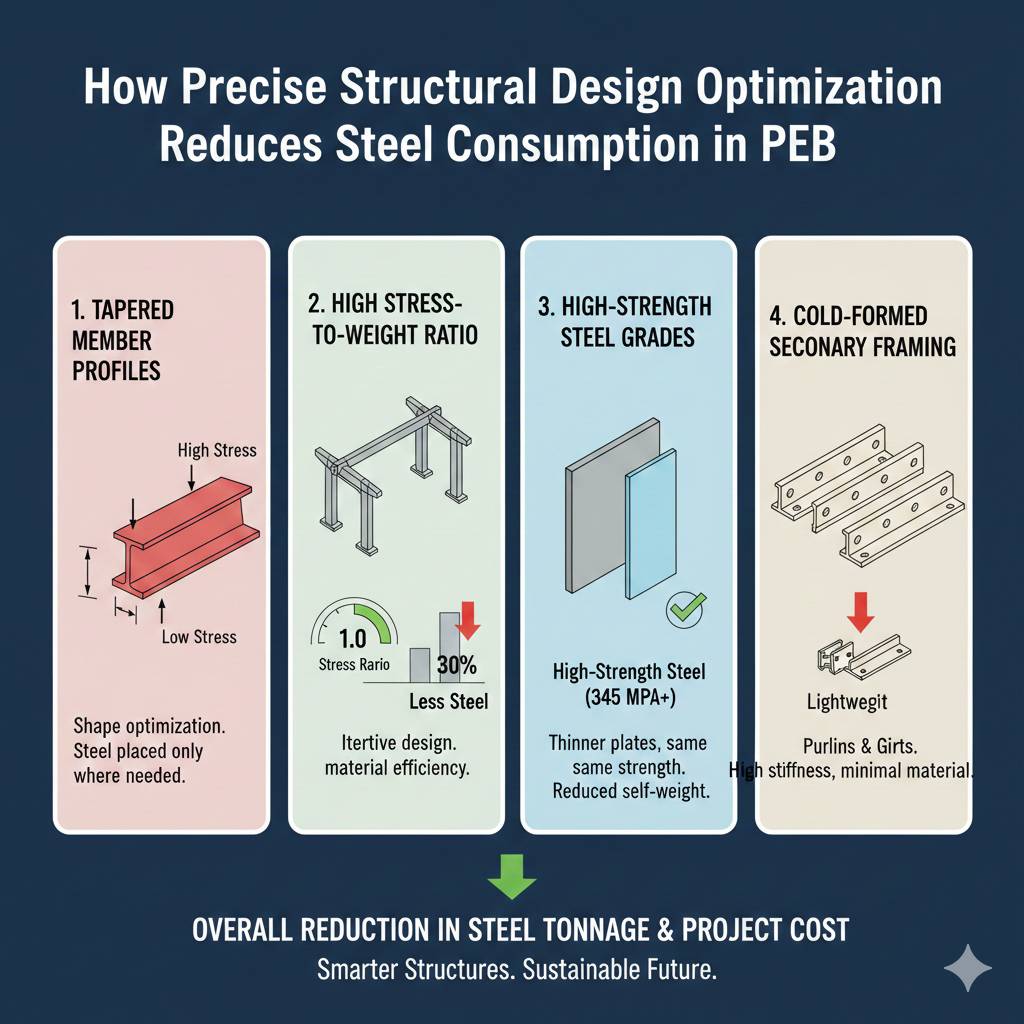
PEB refers to a building system designed, fabricated, and assembled using custom-engineered, factory-made steel components. These include primary steel frames (columns, rafters), secondary members (purlins, girts), and roof/wall panels.

  • Common in: Industrial sheds, warehouses, airports, commercial halls, logistics hubs
  • Made primarily with: Cold-formed or hot-rolled steel components
  • Assembled on-site using bolted connections

What is an RCC (Reinforced Cement Concrete) Structure?

RCC structures are built using steel-reinforced concrete, typically cast on-site (cast-in-situ) or using precast elements.

  • Common in: Residential buildings, schools, hospitals, multi-storey apartments
  • Made using: Concrete and steel rebars
  • Constructed using shuttering, reinforcement placement, and concreting

PEB vs RCC – Detailed Comparison

Parameter PEB Structure RCC Structure
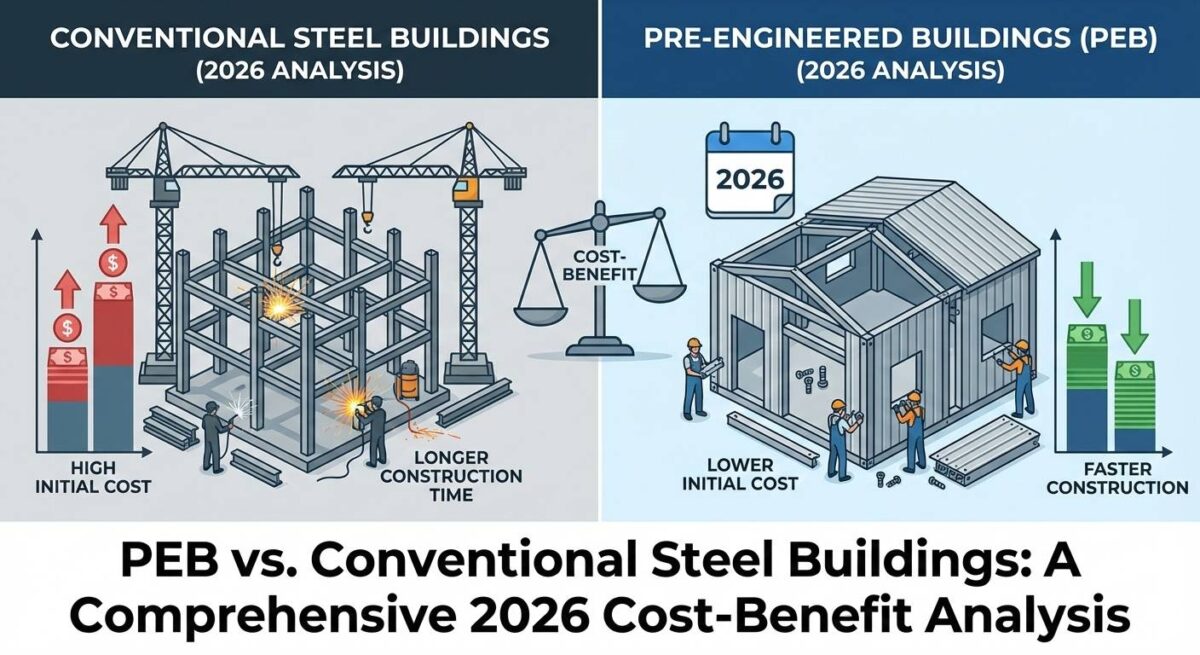
Construction Speed Very fast; factory-made components are assembled on-site Slower due to casting, curing, and multiple on-site activities
Cost Lower for large spans and industrial use Higher initial cost, but more cost-effective for small/medium buildings
Design Flexibility Limited for architectural complexity, better for repetitive/rectangular layouts Highly flexible in shapes, spans, and forms
Material Usage Optimized steel usage through design More material-intensive (concrete + steel + formwork)
Foundation Requirements Lighter structure = smaller foundations Heavier = larger and deeper foundations
Maintenance Needs periodic painting, corrosion protection Minimal maintenance; durable with longer life
Thermal and Sound Insulation Poor insulation unless treated Naturally better insulation due to concrete mass
Seismic Performance Excellent when properly braced Performs well if designed with ductile detailing
Sustainability Recyclable steel = eco-friendly High embodied energy in cement production
Span Capability Large column-free spans (30m+) Limited without beams/trusses or post-tensioning

Which Projects Are Best Suited for PEB?

PEB is ideal for:

  • Industrial buildings

  • Warehouses

  • Cold storage facilities

  • Aircraft hangars

  • Commercial sheds

  • Logistic hubs

  • Agricultural storage units

PEBs shine when the priority is speed, economy, large open spaces, and modularity.

Which Projects Are Best Suited for RCC?

RCC is preferred for:

  • Residential apartments 
  • Hospitals and schools 
  • Office buildings with complex designs 
  • Public infrastructure (flyovers, dams, etc.) 
  • Projects where durability and insulation are priorities 

RCC is the go-to system where architectural flexibility, aesthetics, and occupancy load play

Cost Comparison: RCC vs PEB in Indian Market (2025 update)

Please note that prices vary by location, steel/concrete market rates, and labor availability.

  • PEB structure cost: ₹1,400–₹2,200 per sq. m (built-up)

  • RCC structure cost: ₹2,200–₹3,500 per sq. m (built-up)

While PEB may be cheaper per square meter for larger structures, it requires careful planning and design finalization upfront, since post-fabrication changes are difficult.

Design Lifecycle Considerations

  • PEB lifespan: ~30–50 years with proper maintenance
  • RCC lifespan: 50+ years; can go beyond 100 years with quality construction

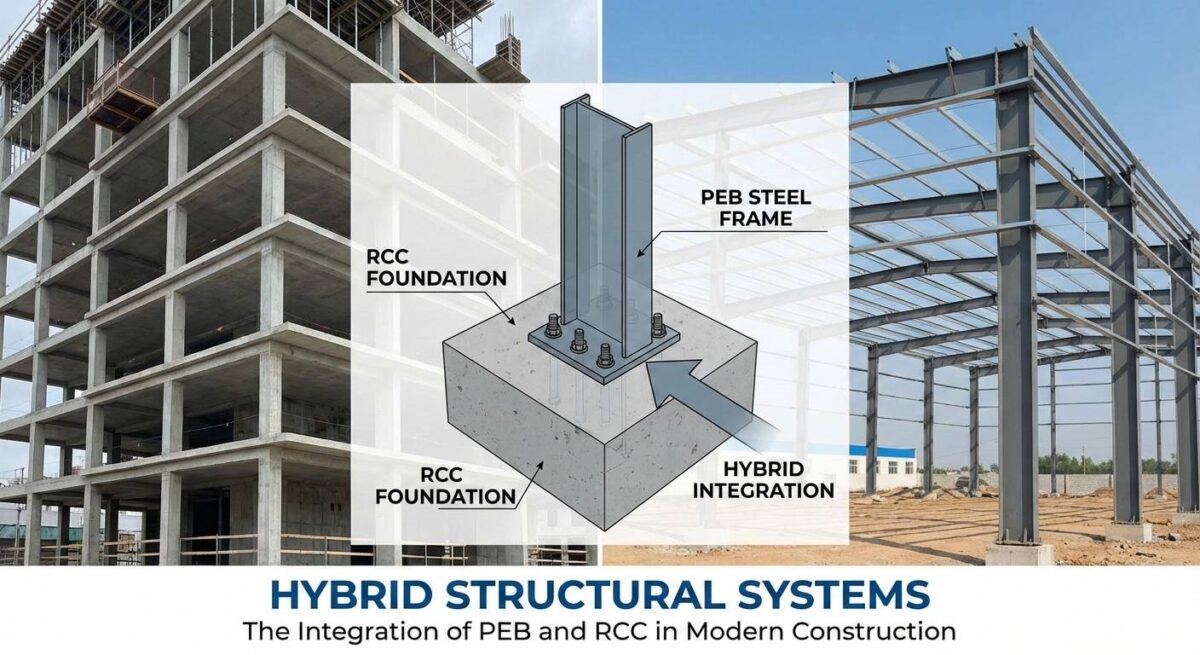
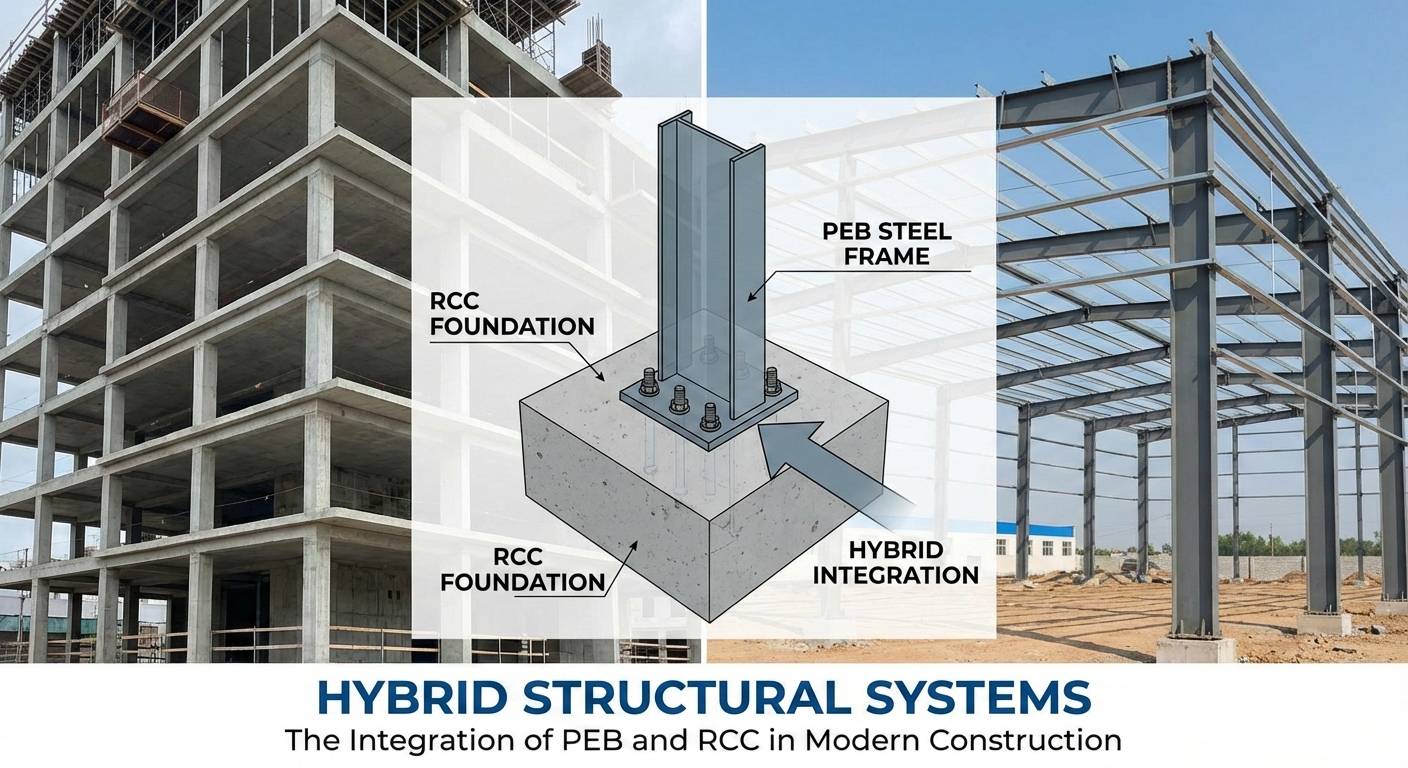
Hybrid Approach: RCC + Steel

In many projects, a hybrid structure may be ideal:

  • RCC for vertical cores (staircases, lifts)
  • PEB or steel for roofs, auditoriums, large halls
  • Steel mezzanines in RCC commercial buildings

At Rakhra Associates, we often recommend hybrid solutions to balance cost, speed, and long-term performance.

Key Decision Factors to Choose Between PEB and RCC

✅ Project Size and Span

Need large open space without internal columns? Go for PEB.

✅ Time Constraints

Short deadline? PEB can be erected 50–60% faster than RCC.

✅ Budget

RCC may be costlier for large industrial buildings. PEB is better for bulk space at lower cost.

✅ Building Use

Commercial/residential with many rooms? RCC. Storage/industry? PEB.

✅ Aesthetic Requirements

RCC offers more flexibility for facades, balconies, and curved forms.

Common Misconceptions

“PEBs are weak” – Wrong. They can withstand heavy loads and earthquakes if designed properly.

“RCC is outdated” – False. It remains the most versatile option for modern construction.

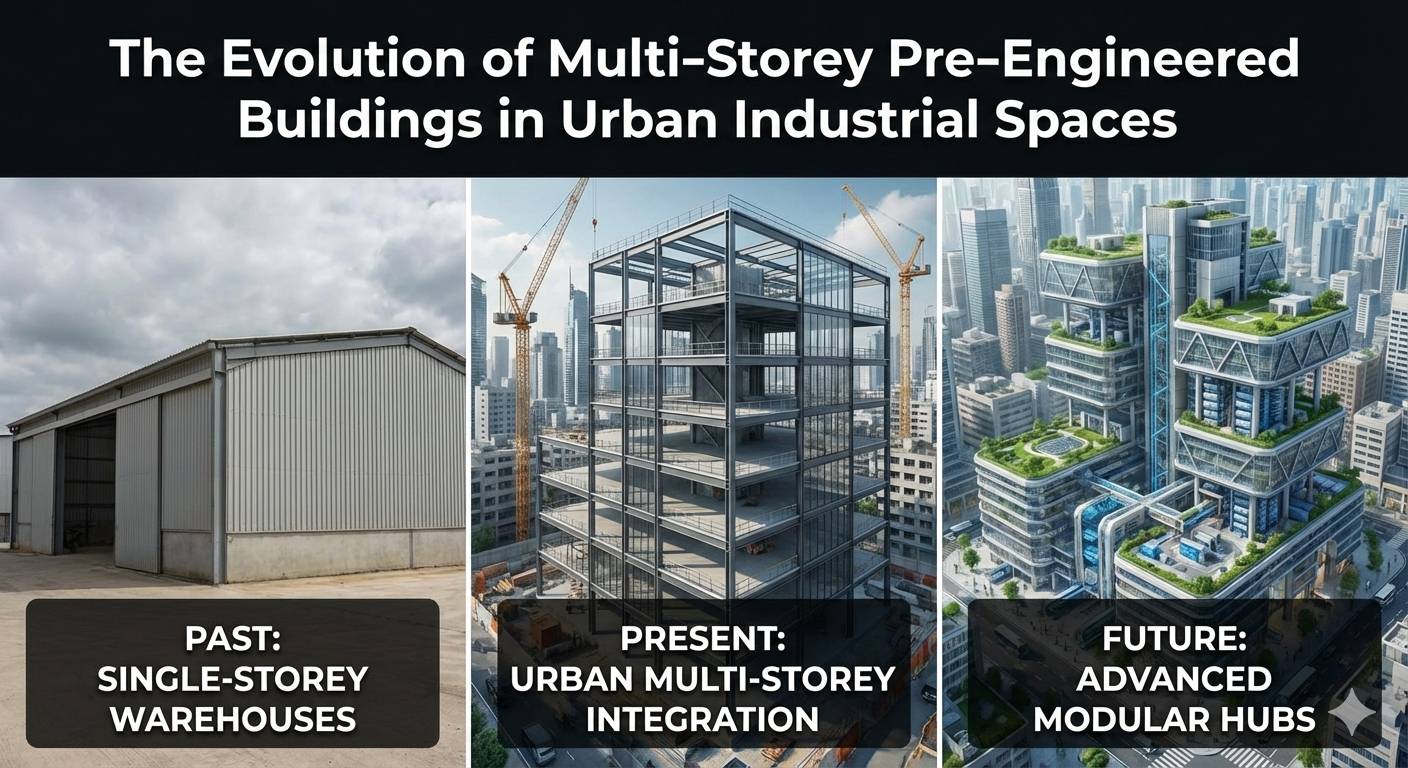
“PEB doesn’t allow for multi-storey” – Not true. Steel-framed multi-level PEBs are used in modern malls, offices, and hotels.

Final Verdict: Which One is Best for You?

There is no one-size-fits-all answer. Your best choice depends on:

  • Purpose of the structure

  • Budget and timeline

  • Site conditions

  • Future expansion needs

  • Regulatory requirements

Expert Consultation Makes the Difference

Whether you're planning an industrial shed in Zirakpur, a residential project in Panchkula, or a commercial complex in Mohali—Rakhra Associates provides objective, expert structural consultancy that fits your project goals.

We deliver:

  • Detailed RCC and steel design
  • PEB design and vetting
  • Structural drawings compliant with IS codes
  • Foundation and load calculations
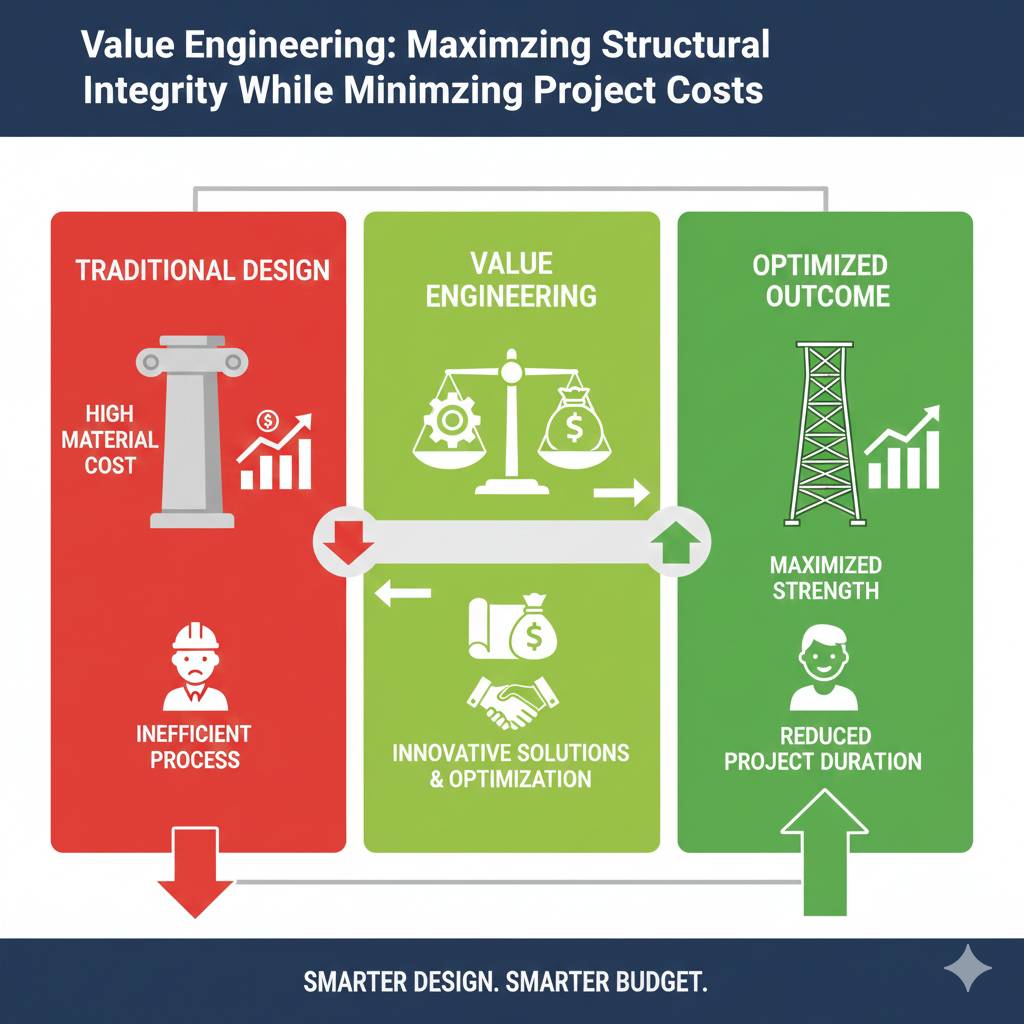
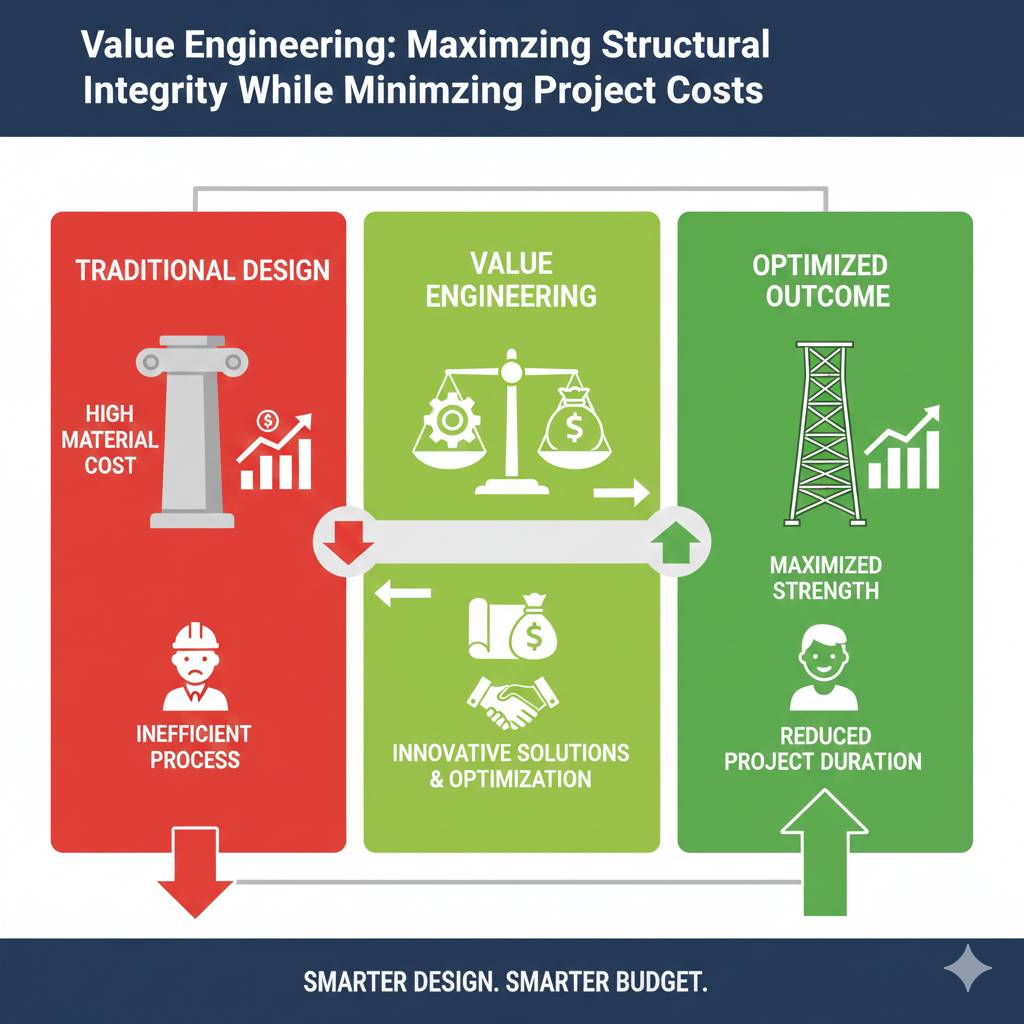
  • Peer review and value engineering